Green despite the sand and salt – the flora of La Graciosa
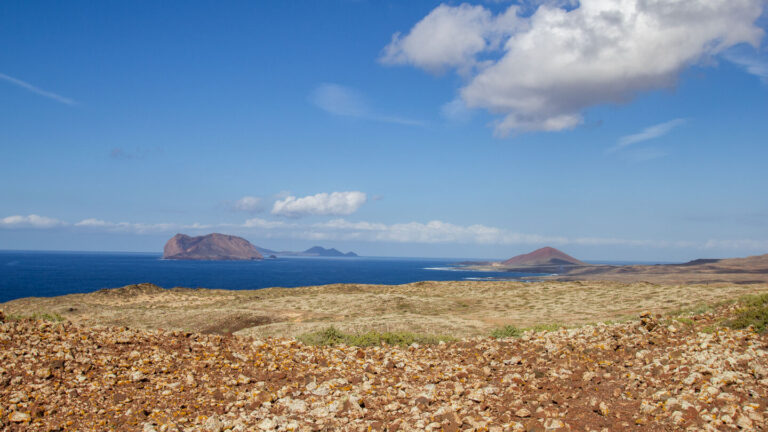
La Graciosa is not a green island. No rainforest, no lush vegetation, no tall trees. What the island does have is a specialised flora that has learnt to cope with salt, wind, drought and volcanic soil. Every plant here is a response to a challenge.
The main plant communities
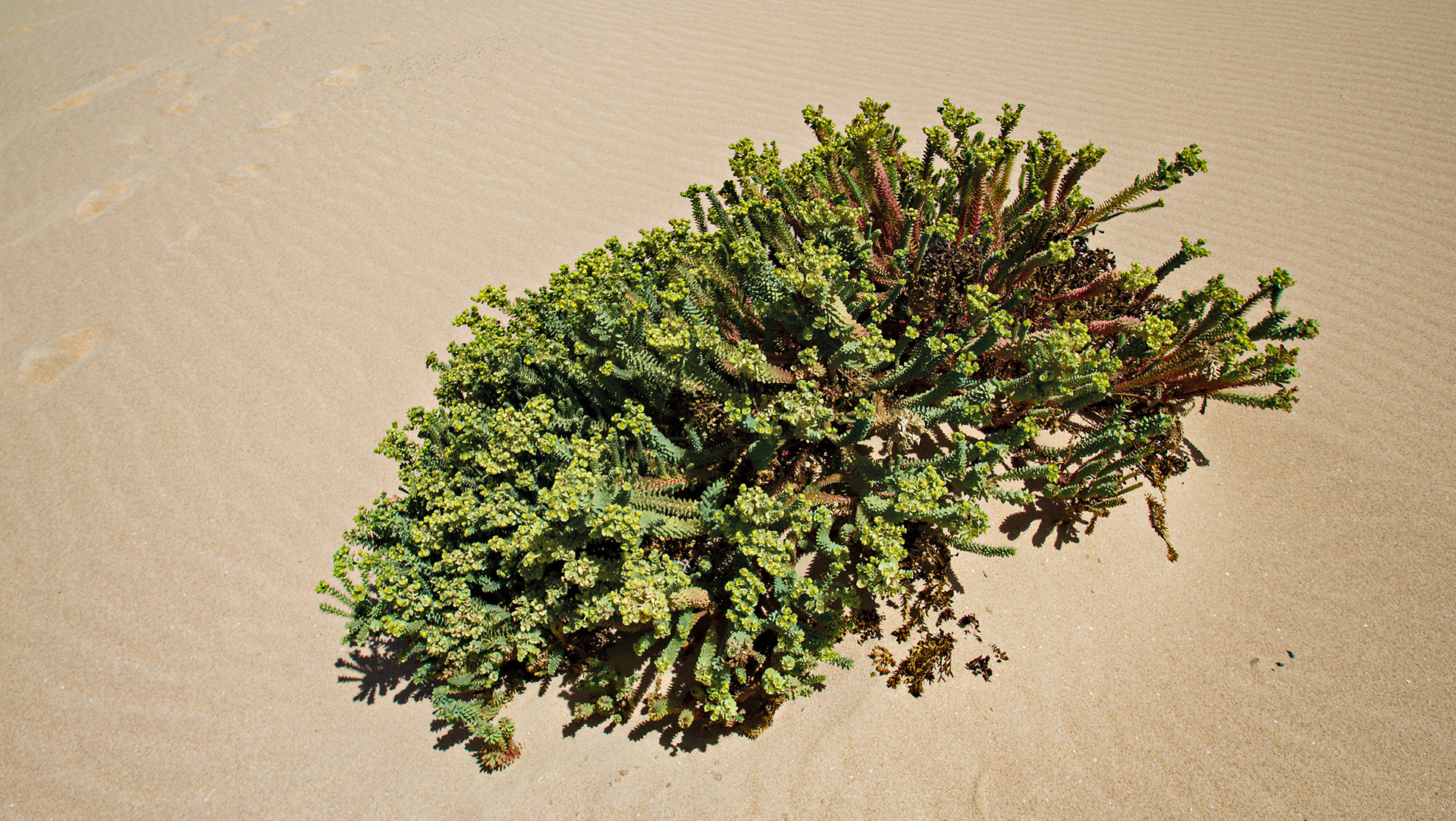
Spurge (Euphorbia) – the dominant plant
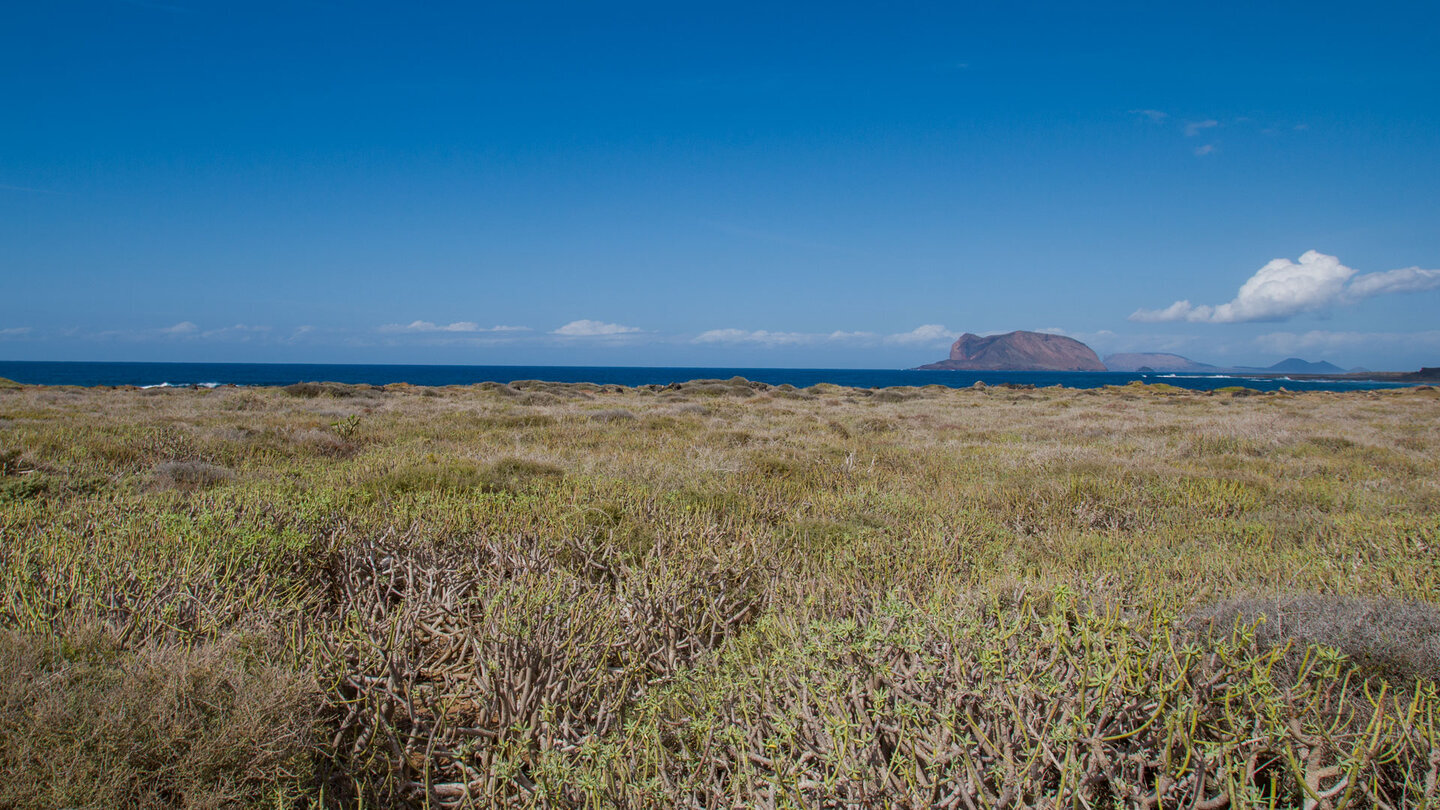
Spurge (Euphorbia) is the most common and striking plant on La GraciosaThere are several endemic Euphorbia species in the Canary Islands: Euphorbia regis-jubae (Tabaiba dulce) and Euphorbia officinarum (Cardón). Both are succulents, store water in thick stems and tolerate drought with ease.
| Spurge species on La Graciosa | |
|---|---|
| Spurge (Euphorbia) | Most common group of plants – succulent, drought-tolerant |
| Tabaiba amarga | Resin spurge – found on coasts and dry slopes |
| Tabaiba dulce | Sweet spurge – edible for locals |
| Cardón (Euphorbia canariensis) | Candelabra spurge – impressively large |
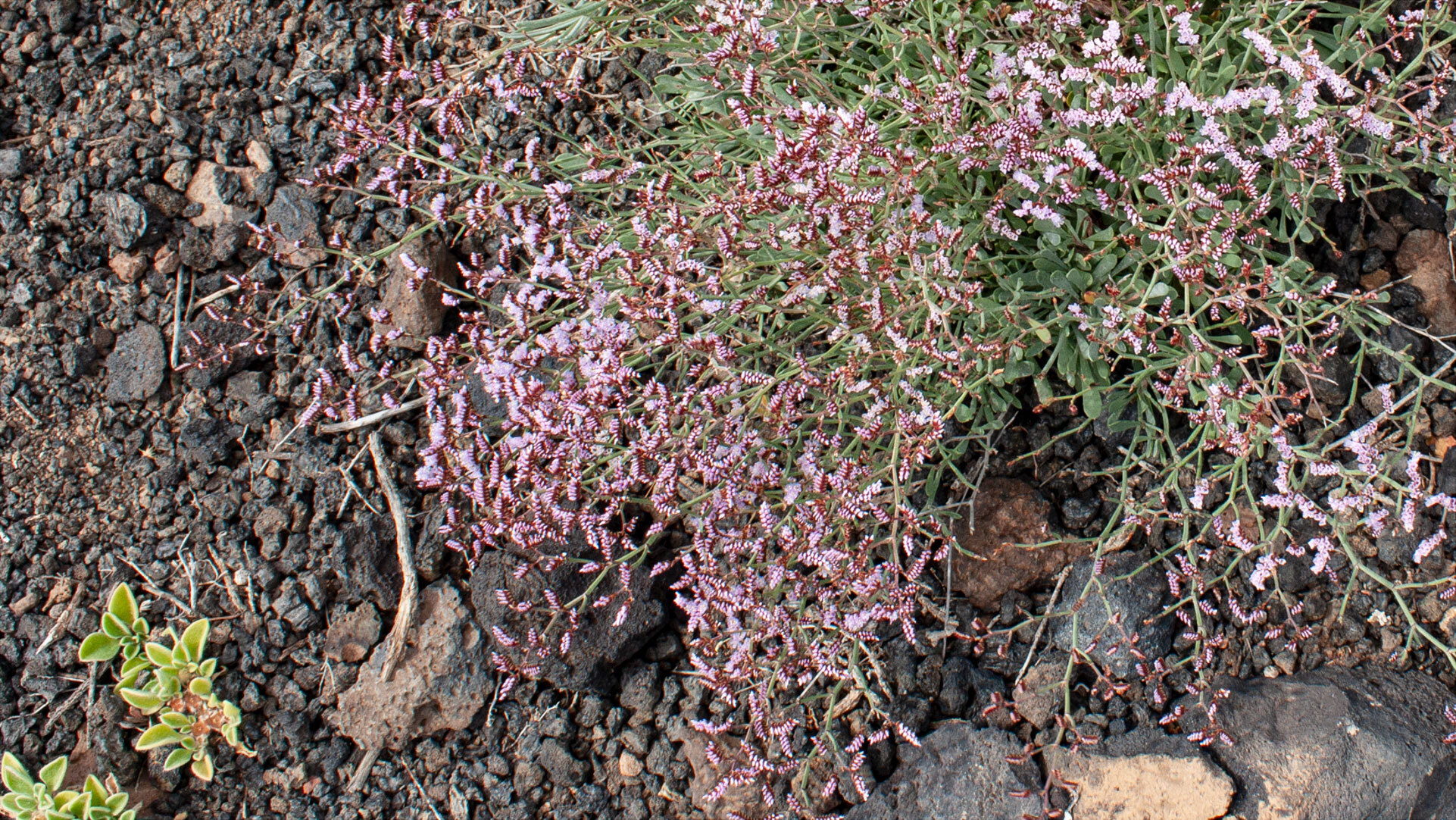
Sea lavender (Limonium) – the coastal purple
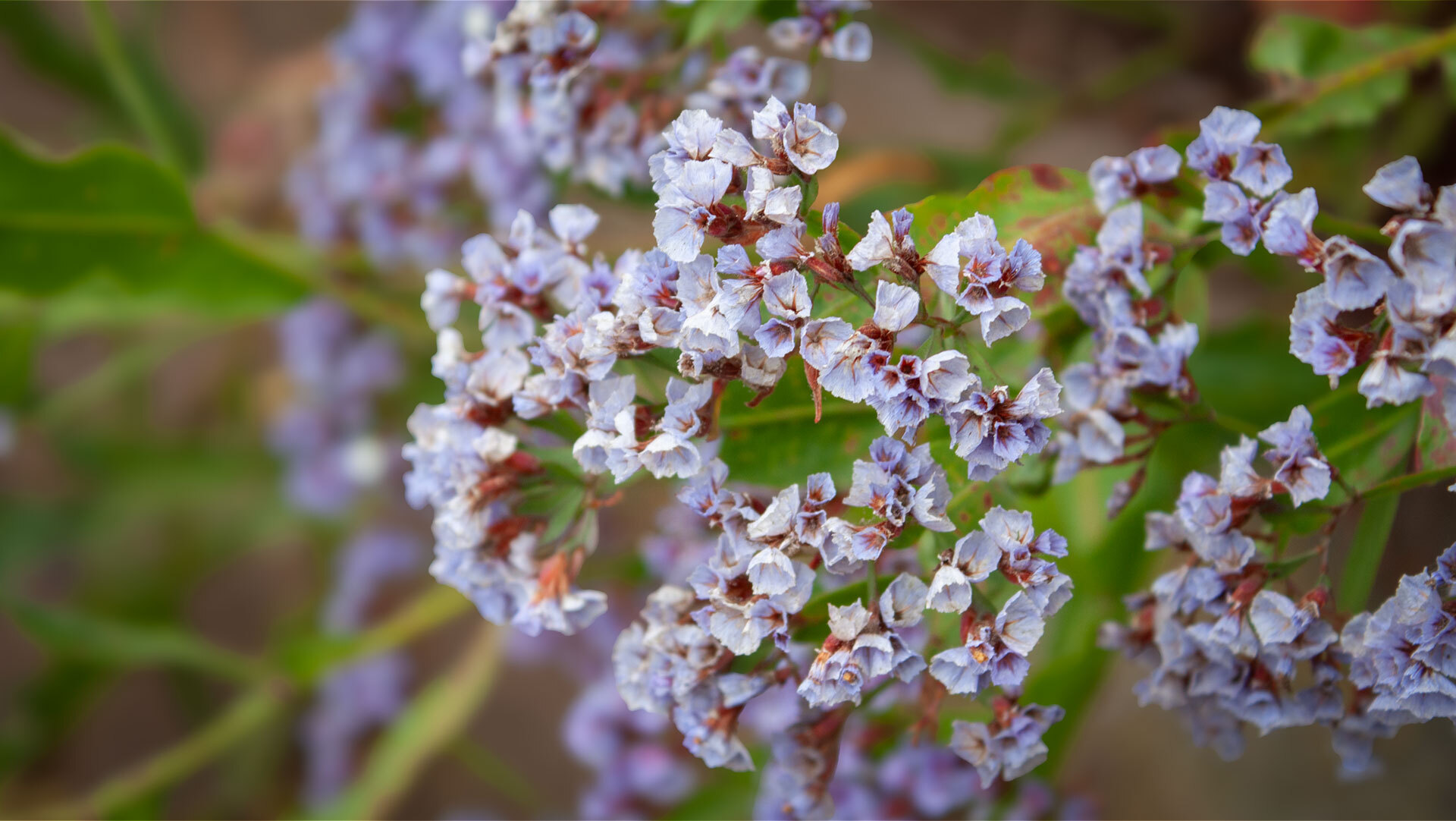
Sea lavender (Limonium) is the colourful hallmark of the coast. The small purple flowers grow in dense clumps right by the water – on rocky outcrops, in crevices, on salt-sprayed slopes. Sea lavender is one of the few plants that can cope with direct exposure to salt spray.
Dune vegetation near Pedro Barba
Near Pedro Barba and in the north of the island there are dune fields with typical coastal dune vegetation: Sea rush, Sea mustard, Sea horseradishThese plants stabilise the dunes with their deep root systems.
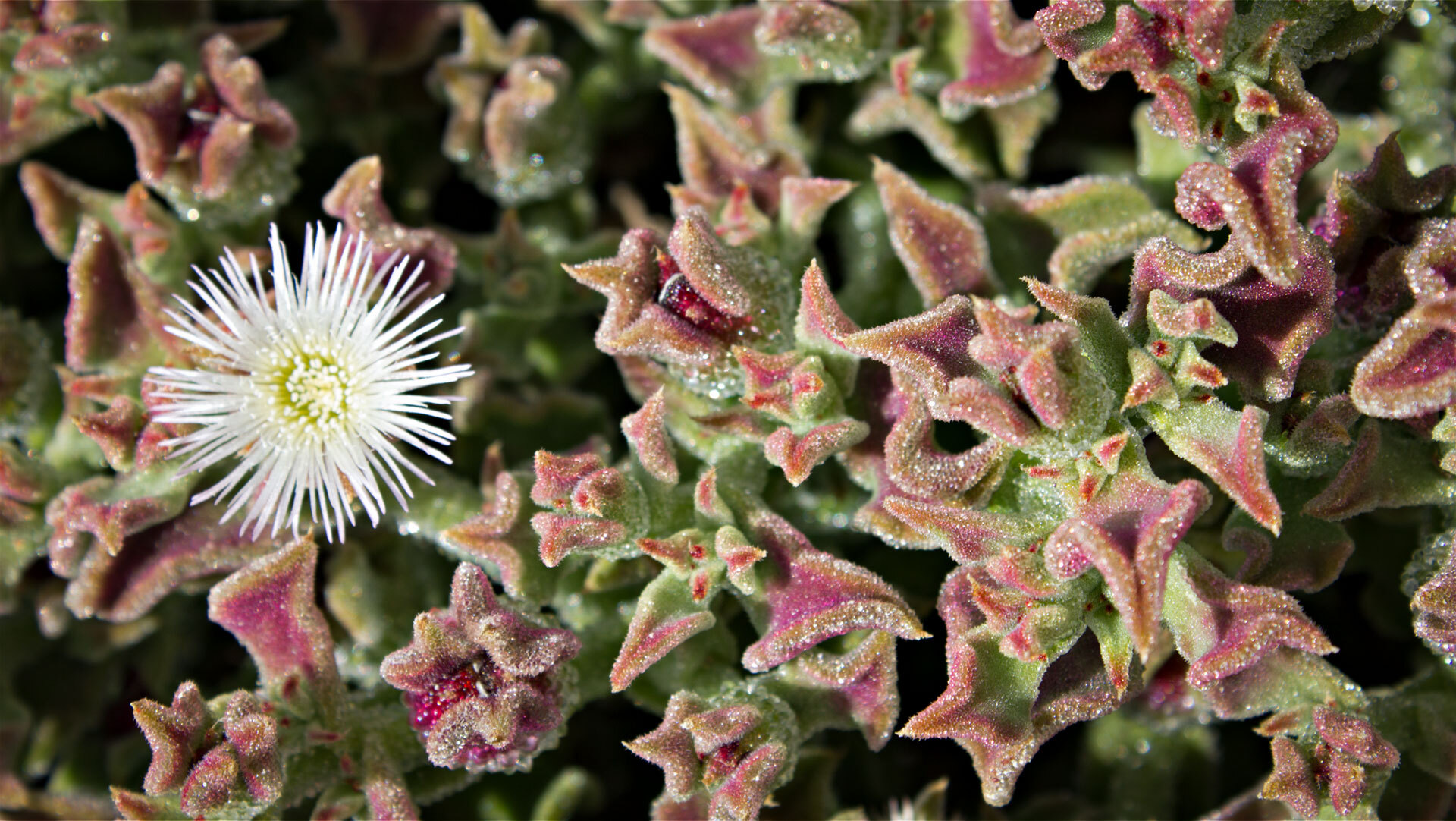
Saltwort (Atriplex) and beach saltwort
Along the coastal footpaths, you’ll find saltwort – a small, grey plant that actively excretes salt. You can see it: the leaves glisten slightly, as if they were dusted.
No poisonous animals – but be careful with plants
Good news: No poisonous animals on La Graciosa – no snakes, no poisonous spiders, no dangerous scorpions. As for plants: The Spurge (Euphorbia) contains a milky-white latex which can cause skin irritation. Do not touch it, and do not rub your eyes with it.
Nature conservation – mandatory notice
- Wild camping prohibited – without exception across the entire island
- Campfires prohibited – including on the beach
- Bicycles only on designated tracks
- Entry to Montaña Clara, Roque del Este and Roque del Oeste prohibited
- Archipiélago Chinijo Nature Park · Lanzarote UNESCO Biosphere Reserve since 1993
- Archipiélago Chinijo Marine Reserve – 70,000 ha, Europe’s largest marine reserve
Yes – occasionally, particularly near the village. True cacti (Opuntia, prickly pear) were introduced by humans. The native succulents are the Euphorbia species.
No – strictly prohibited in the nature reserve.
Conclusion
- La Graciosa’s flora is specialised, not lush – and that is what makes it fascinating.
- Spurge, sea lavender, saltwort: every plant has its own survival strategy.
- There are no poisonous animals on La Graciosa – but there is poisonous spurge: do not touch it.
This article is based on on-site research by the go-la-graciosa.com editorial team. Last updated: April 2026