No light, no noise – stargazing on La Graciosa
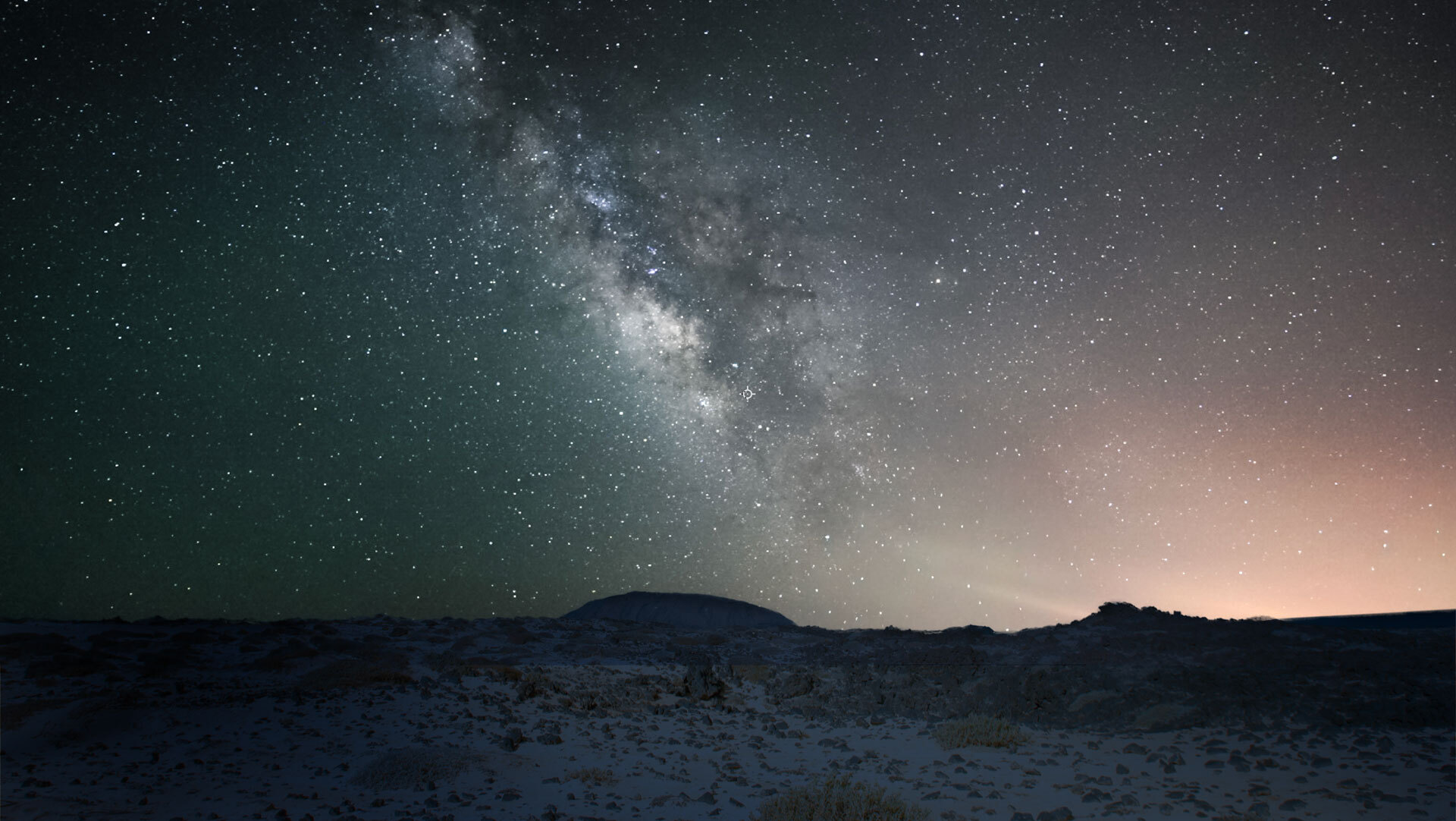
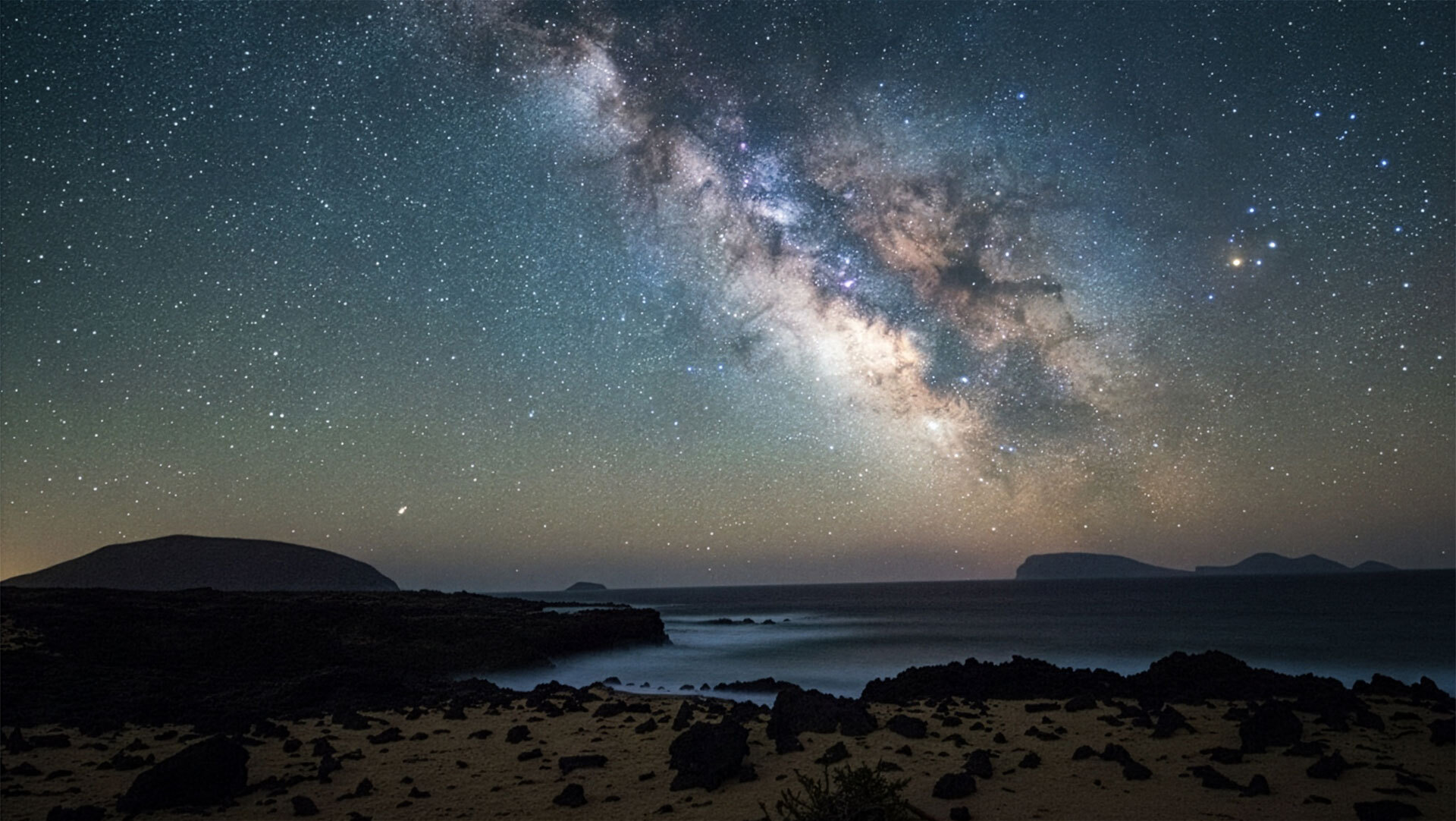
When, on La Graciosa the last ferry has set sail and the lights of Caleta del Sebo grow smaller, something remarkable happens: the sky opens up. No light pollution from the mainland, no high-rise buildings, no streetlights. Just the Atlantic sky above a small island – and the Milky Waystretching from horizon to horizon.
Why La Graciosa is special as a stargazing destination
Minimal light pollution
La Graciosa has no industry, no high-rise buildings, and no tarmac roads with street lighting outside the village. Caleta del Sebo The village itself has street lighting – but if you walk a few hundred metres out of the village, you are immediately in almost total darkness.
| Dark-Sky La Graciosa – Facts | |
|---|---|
| Light pollution | Minimal – one of the darkest islands in the Canaries |
| Bortle Scale | Approx. 3–4 (rural dark zone) |
| Milky Way | Visible all year round, particularly impressive in summer |
| Planets | Easily visible to the naked eye |
| Shooting stars | Perseids (August) and Leonids (November) are particularly good |
Lanzarote as a Starlight Reserve
Lanzarote and the Biosphere Reserve are on their way to becoming an official Starlight Reserve. La Graciosa benefits from this initiative as part of the reserve. Protecting the night sky is part of nature conservation.
The best viewing spots
The island’s interior and northern part
The island’s interior, far away from Caleta del Sebooffers the darkest conditions. Recommended: the sandy plain near Las Hoyas or the area around Montaña Bermeja – far from the few lights of the village.
Montaña Amarilla
Montaña Amarilla is ideal for stargazing for two reasons: 1) the elevation provides an unobstructed 360-degree view, 2) it is situated in the south of the island, far from the village. Please note: Do not attempt the ascent in the dark without a torch and GPS.
Playa de las Conchas – the north
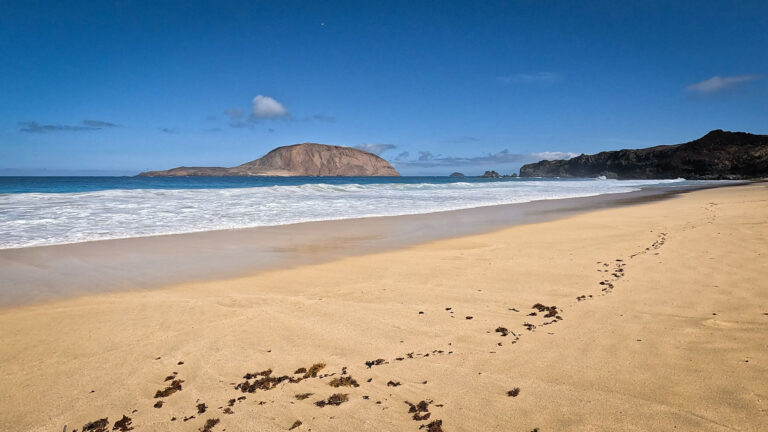
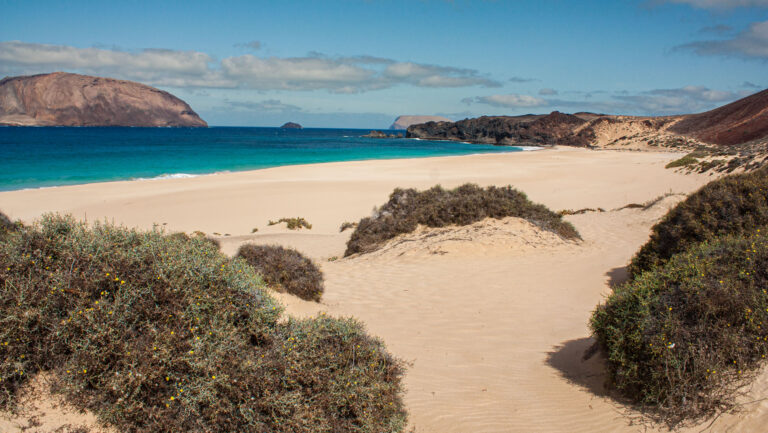
The north of the island is the darkest – and the Playa de las Conchas at night is an experience in its own right. The white sand reflects the starlight, with the silhouette of Montaña Clara standing out against it. Planning: Return route via GPS, torch, warm jacket.
Practical tips for stargazing
| Sternenbeobachtung — Equipment & Timing | |
|---|---|
| Best time of year | Autumn and winter: longer nights, drier air |
| Best time of day | 2–3 hours after sunset until sunrise |
| New moon | Best conditions – no moonlight obscuring faint stars |
| Equipment | Torch (red mode), warm jacket, GPS, binoculars (minimum) |
| Binoculars | 8×42 binoculars are sufficient to see star clusters and the Andromeda Galaxy |
| Telescope | Not essential – but binoculars on a tripod are well worth it |
Observation tips
- Red torch light: helps your eyes adapt to the dark
- 20 minutes in the dark: you’ll then see 10 times more stars
- New moon nights: check the lunar phase calendar
- Warm jacket: even in summer, nights on La Graciosa can get chilly
- Stargazing app: Stellarium (free, offline) for navigating the night sky
Nature conservation – mandatory notice
- Wild camping prohibited – without exception across the entire island
- Campfires prohibited – even on the beach
- Bicycles may only be ridden on designated tracks
- Entry to Montaña Clara, Roque del Este and Roque del Oeste is prohibited
- Archipiélago Chinijo Nature Park · Lanzarote UNESCO Biosphere Reserve since 1993
- Archipiélago Chinijo Marine Reserve – 70,000 ha, Europe’s largest marine reserve
Yes – in good conditions (new moon, clear skies), the Milky Way is clearly visible as a band. Particularly impressive from July to September.
There are no specialised tours on La Graciosa. Independent stargazing is the only option – with a GPS, torch and stargazing app.
Conclusion
- La Graciosa at night: minimal light pollution, the Milky Way is visible, and you can count shooting stars.
- Best spot: the island’s interior or Montaña Amarilla – far from the village, with an unobstructed horizon.
- Red light, a warm jacket, 20 minutes to let your eyes adjust to the dark: then the sky opens up.
This article is based on on-site research by the go-la-graciosa.com editorial team. Last updated: April 2026