Lava, tuff and time – the geology of La Graciosa
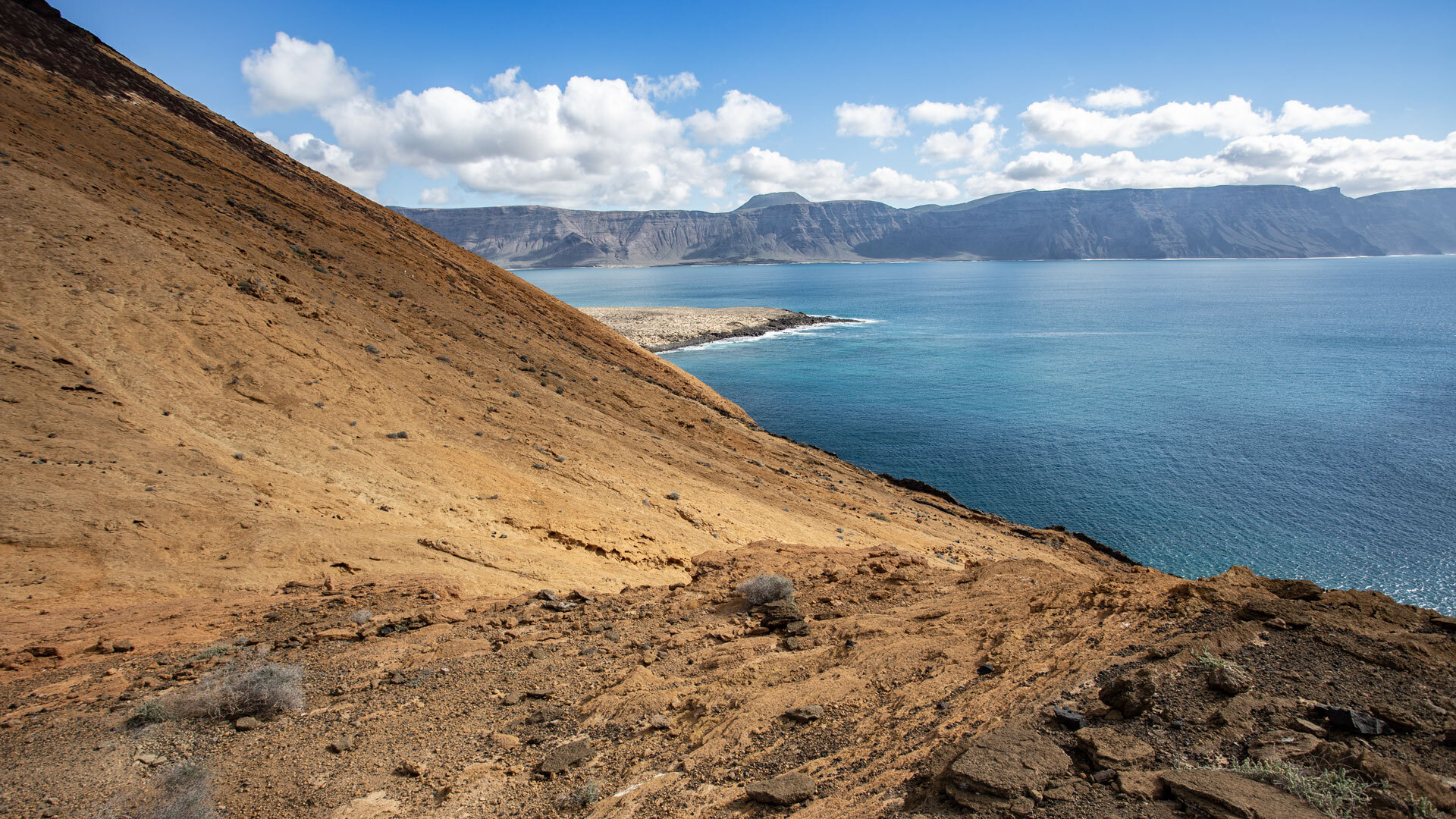
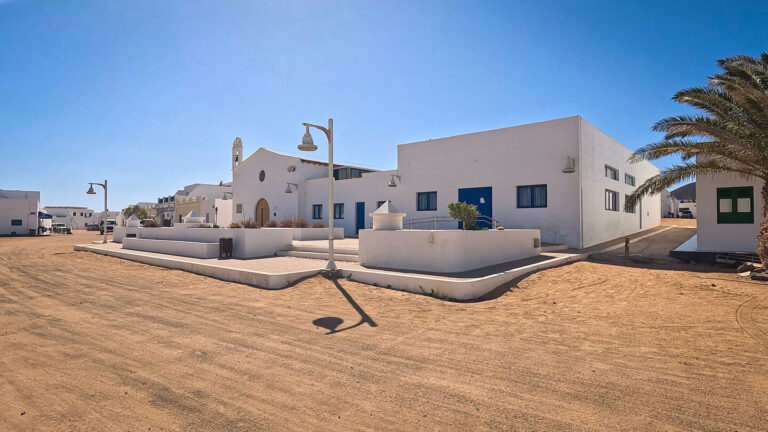
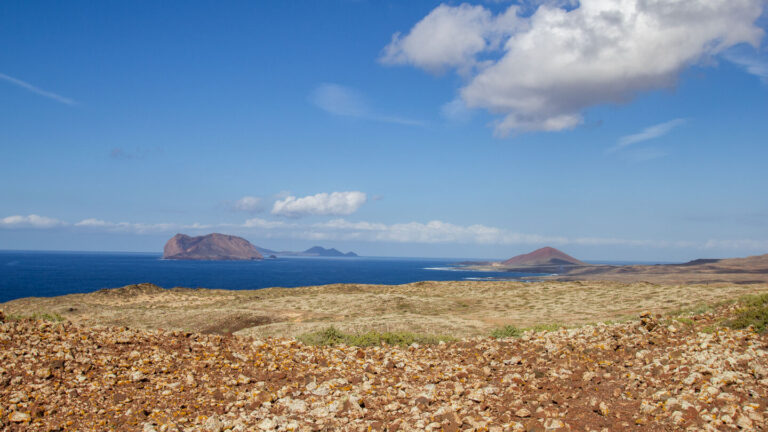
La Graciosa is geology you can experience first-hand. No museum display cases, no educational panels – just the open landscape, revealing the legacy of millions of years of volcanic activity. A yellow tuff cone here, a black basalt coast there, white sand dunes in between.
The volcanic cones
Montaña Amarilla: the hydrovolcano
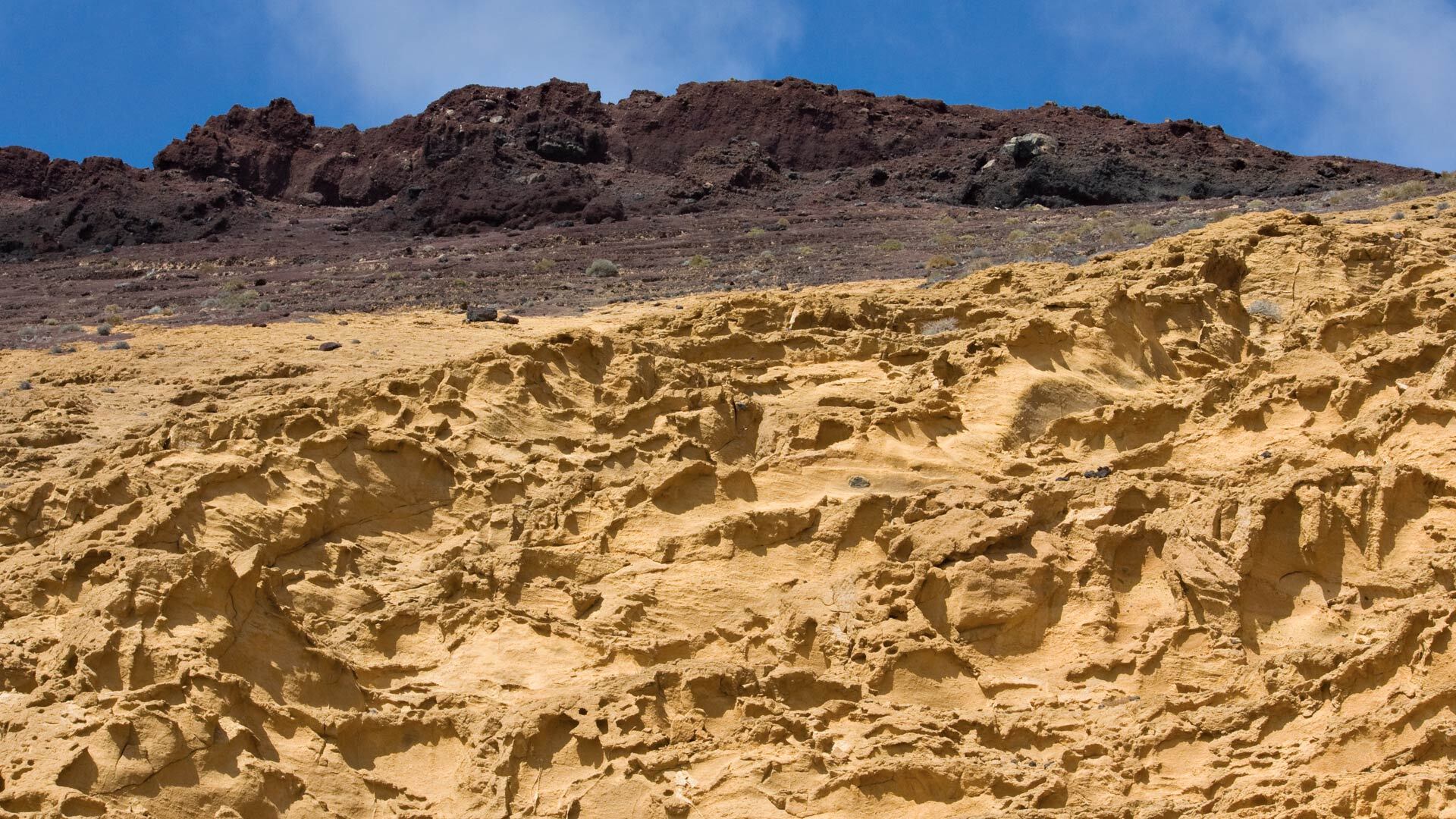
Montaña Amarilla (172 m) is the island’s most geologically fascinating spot. Its yellowish-red rock was formed by hydrovolcanismseawater came into contact with hot magma and exploded – the resulting gases fragmented the rock into fine tuff. The colour comes from iron oxides. The result: a bright yellow volcanic cone that literally glows under the Canarian sunlight.
| Montaña Amarilla – Geology | |
|---|---|
| Height | 172 m (IGN) |
| Rock type | Tuff (yellow-red due to iron oxides) |
| Formation | Hydrovolcanism – magma meets seawater |
| Distinctive feature | Yellow volcanic crater – unique to the Canary Islands |
| Access | On foot or by bike, approx. 30–45 mins from Caleta del Sebo |
Montaña Bermeja: the red basalt
Montaña Bermeja (157 m) takes its name from its colour: bermejo = reddish. Basalt with a high iron content, which oxidises on contact with air and water. The red volcanic rock provides good grip – ideal for the ascent and spectacular in the evening light.
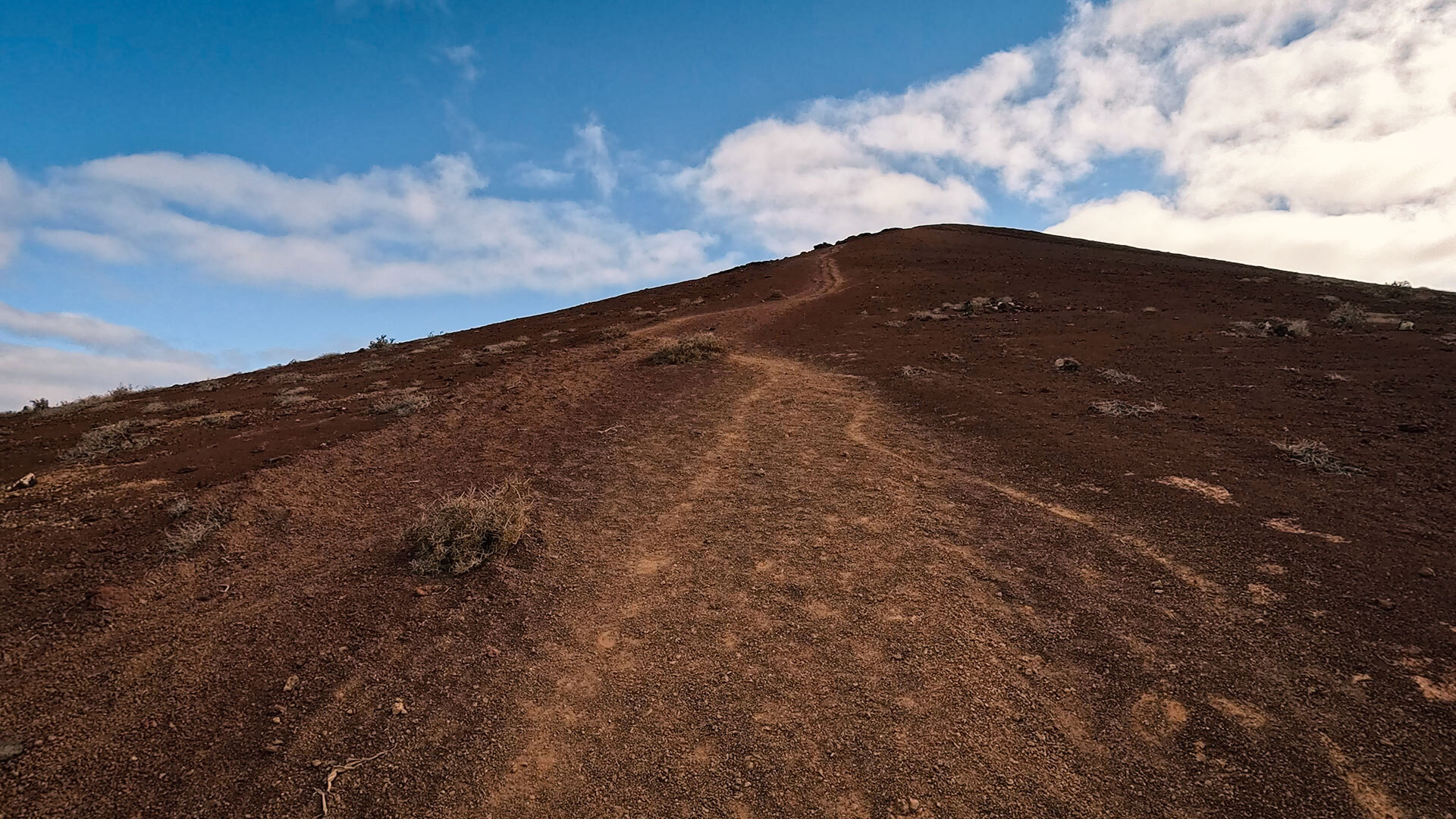
Las Agujas: the jagged needles
Las Agujas Grandes (266 m) and Las Agujas Chicas (257 m) are the highest points on the island. Their name (Agujas = needles) describes the jagged lava formations that rise from the island’s interior.
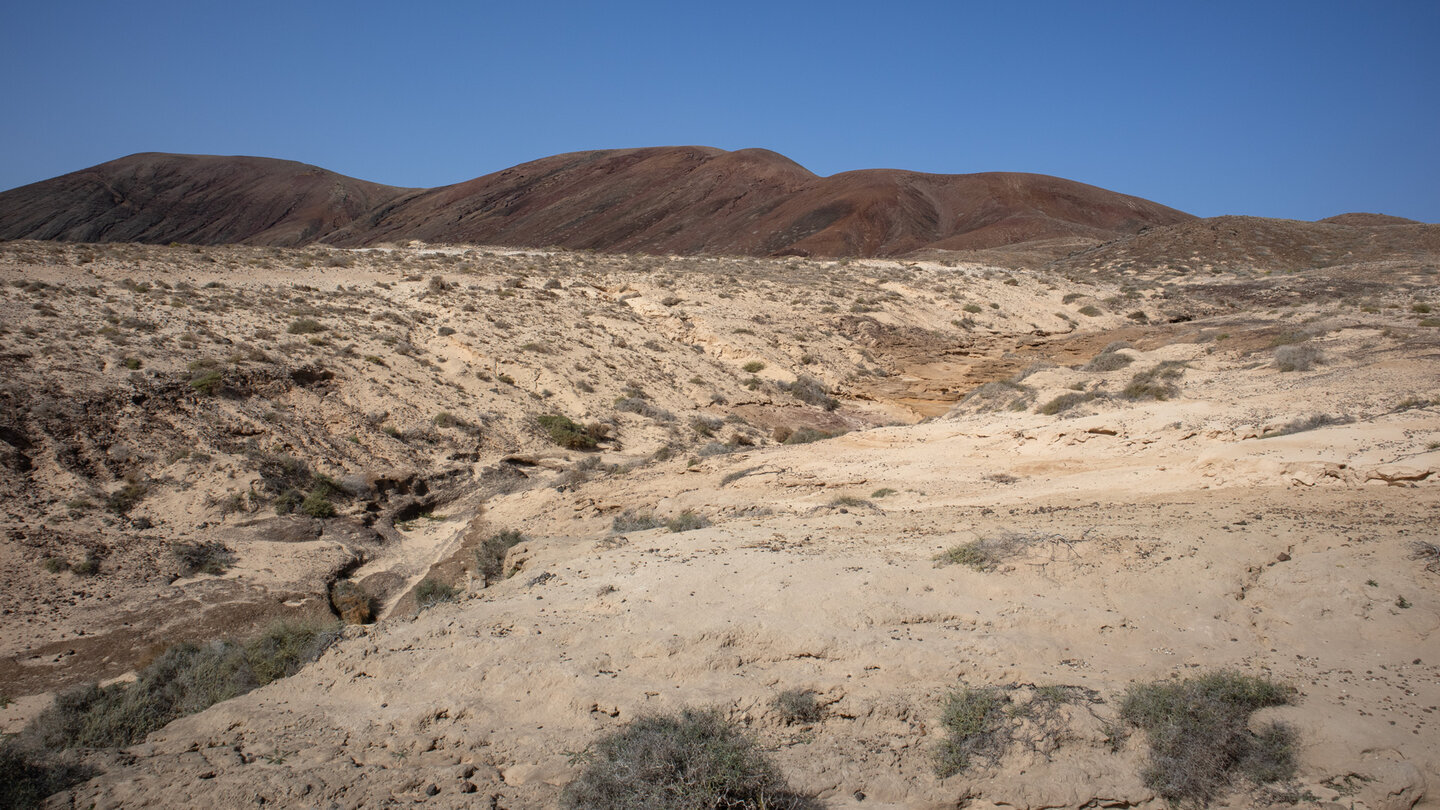
Basalt coasts and geological features
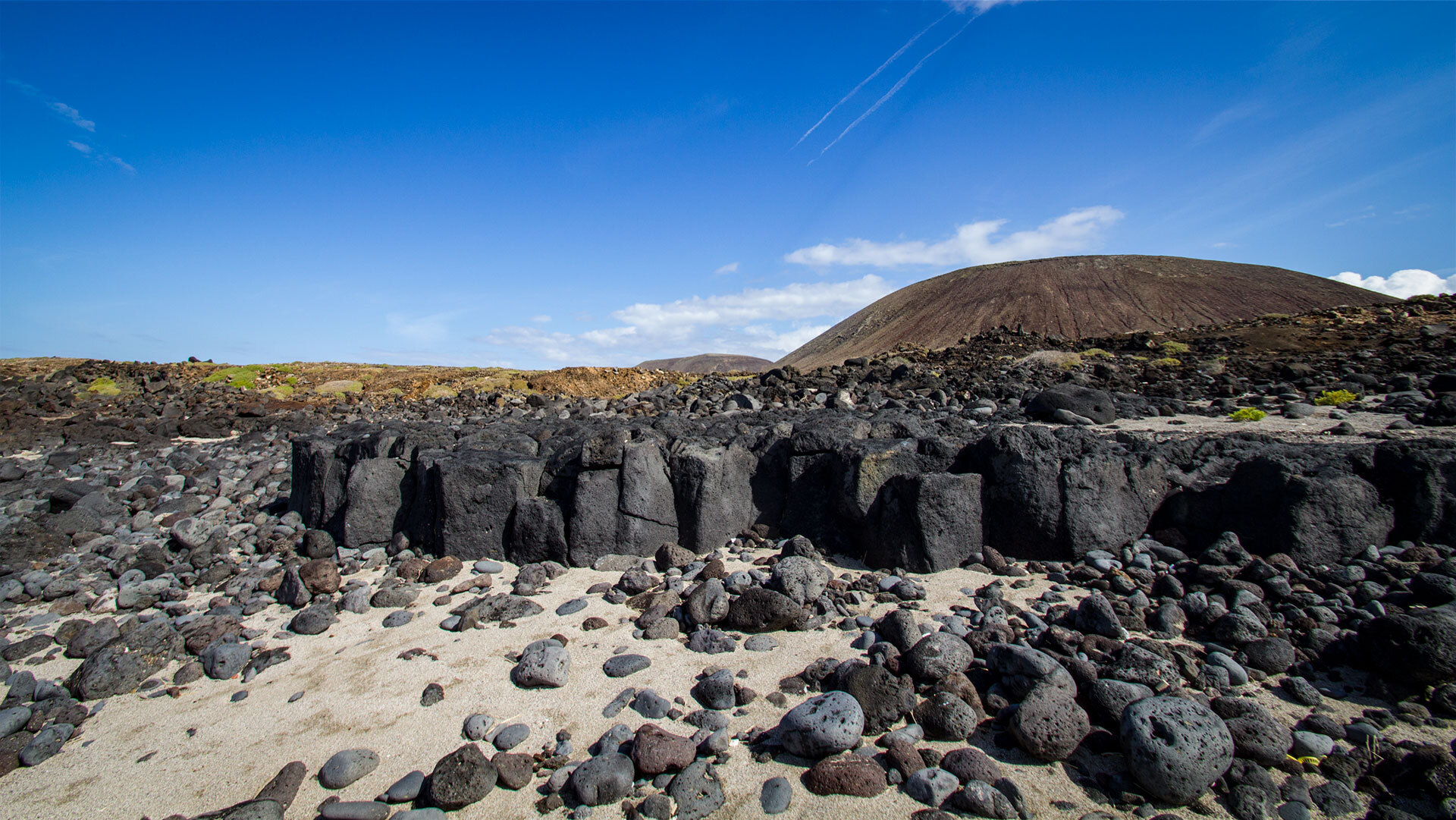
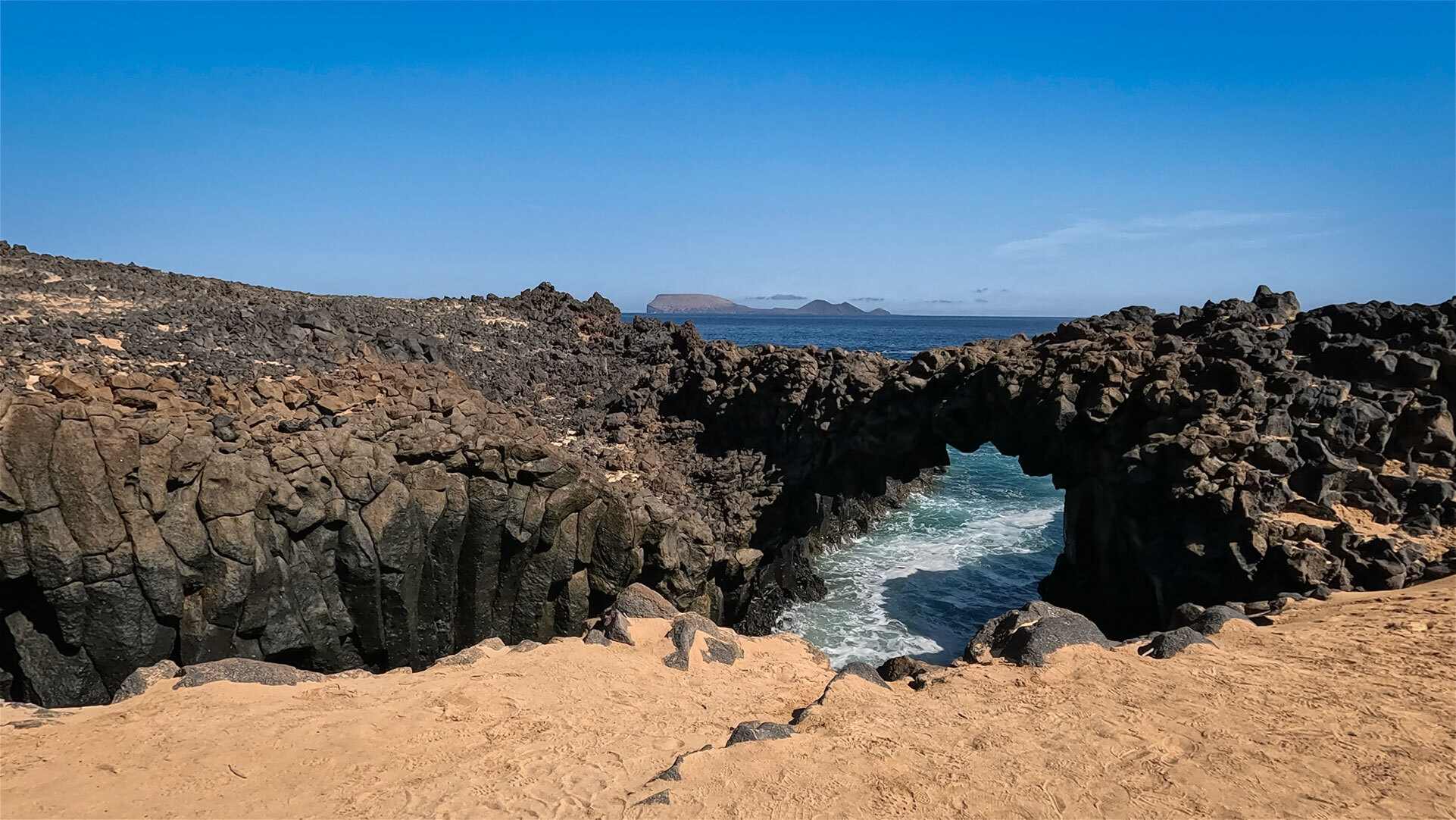
Los Arcos de los Caletones
Los Arcos de los Caletonesa rock formation on the north coast consisting of stacked basalt arches. Formed by millennia of wave erosion – the sea has washed away the softer rock, leaving behind the harder basalt ridges.
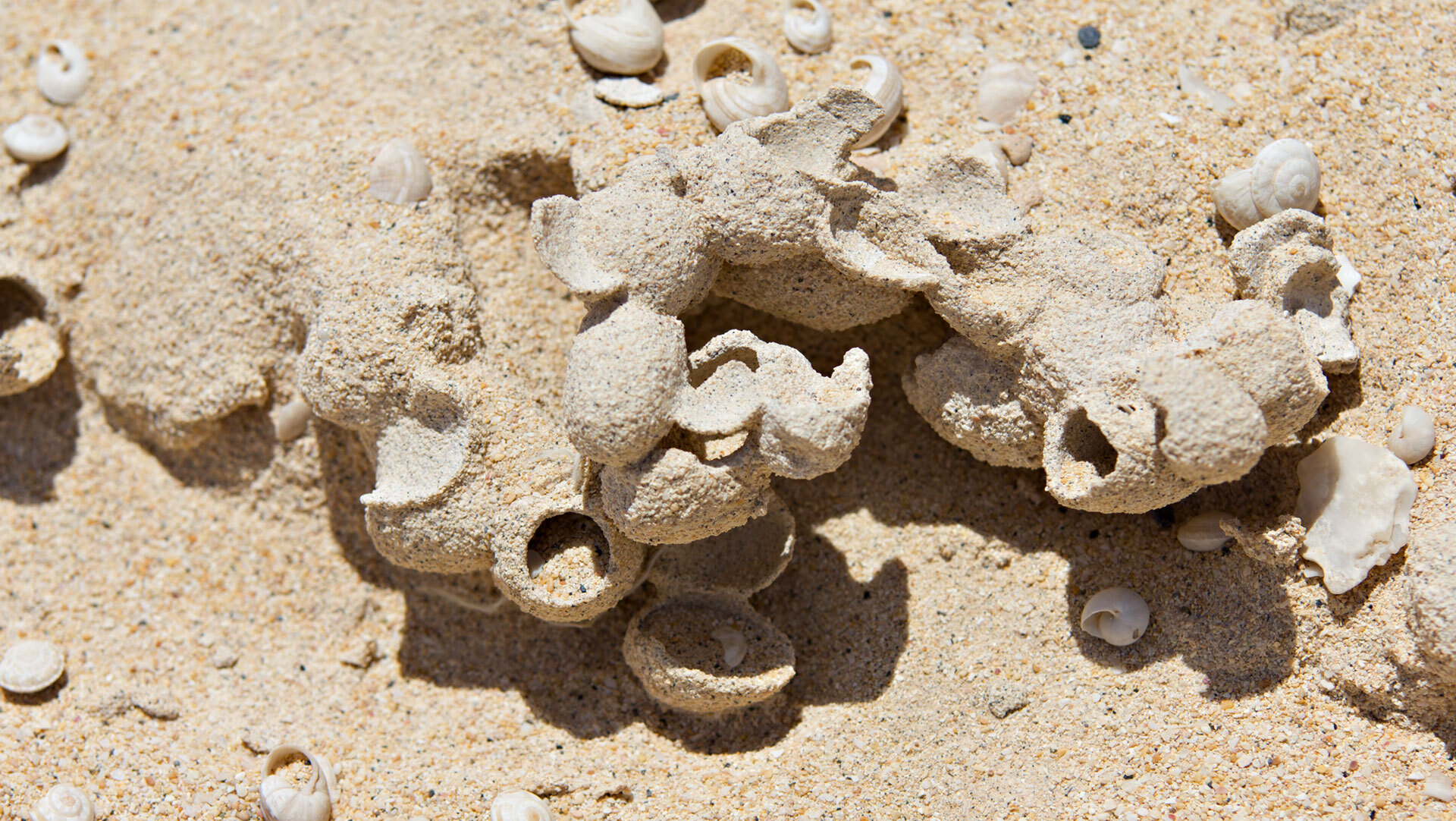
Fossilised Anthophora nests – the silent wonder
On some stretches of coastline on La Graciosa one can find fossilised brood cells of an extinct species of fur bee (Anthophora). These bees built their nests in sandy soil – which fossilised over time. What remains are fossilised tubular structures in the rock, which are preserved better here than almost anywhere else in the world.
Sand dunes and salt deposits
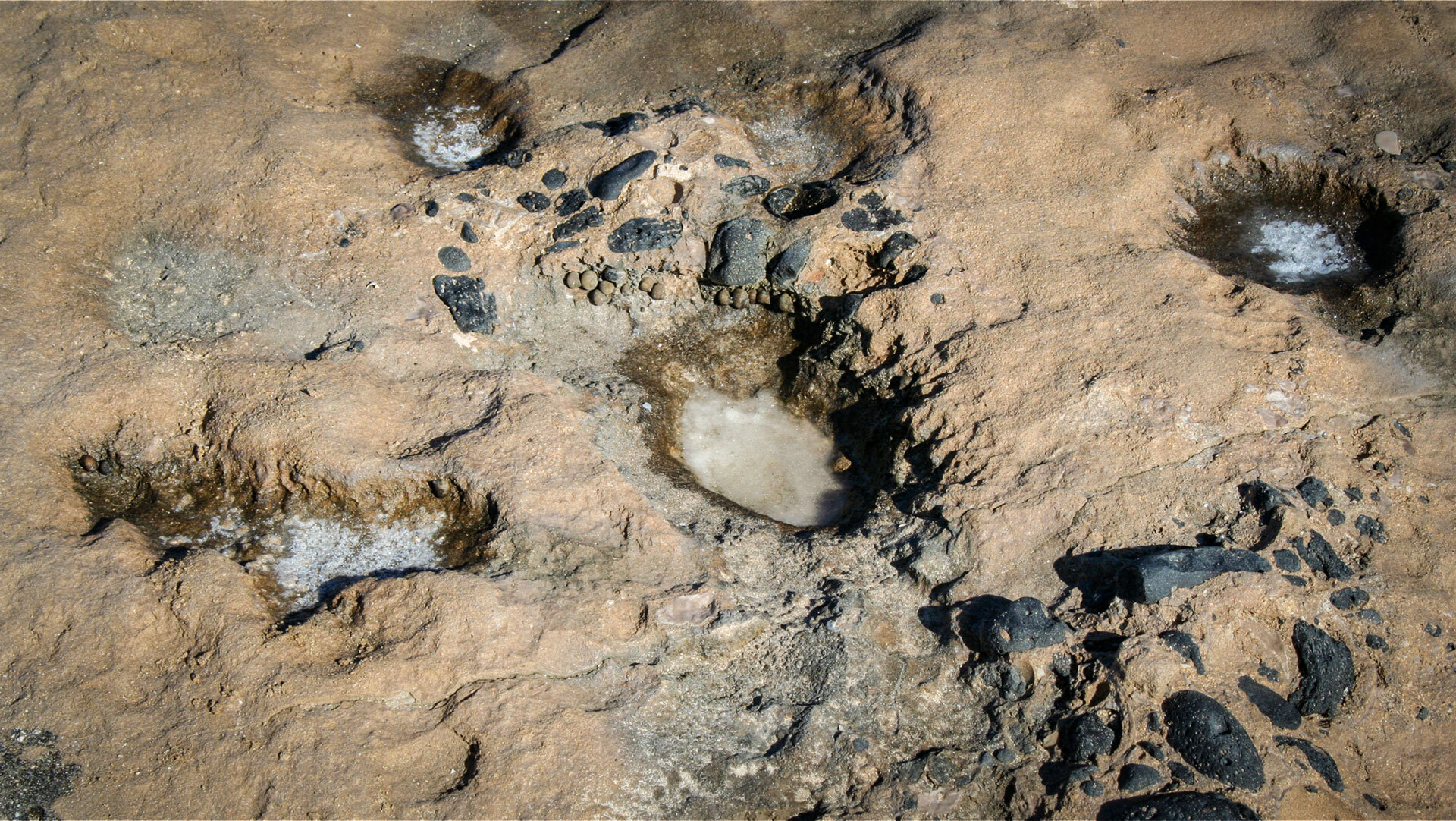
Near Pedro Barba and along the east coast there are fields of dunes – a rare sight in the Canary Islands, and well-preserved here. At Playa del Salado Salt deposits can be found in the hollowed-out lava rocks: seawater that has evaporated, leaving behind white crystals.
Nature conservation — mandatory notice
- Wild camping prohibited – without exception across the entire island
- Campfires prohibited – including on the beach
- Cycling permitted only on designated tracks
- Entry to Montaña Clara, Roque del Este and Roque del Oeste prohibited
- Archipiélago Chinijo Nature Park · Lanzarote UNESCO Biosphere Reserve since 1993
- Archipiélago Chinijo Marine Reserve – 70,000 ha, Europe’s largest marine reserve
No – this is prohibited in the nature reserve. Even individual stones, shells or fossils belong to the island and must not be taken away.
Conclusion
- La Graciosa is an open-air geological museum: hydrovolcano, basalt, dunes, fossils.
- Montaña Amarilla is the geological highlight – a yellow tuff crater, unique in the Canary Islands.
- Los Arcos de los Caletones and the fossilised breeding chambers are hidden treasures.
This article is based on on-site research carried out by the go-la-graciosa.com editorial team. As at April 2026