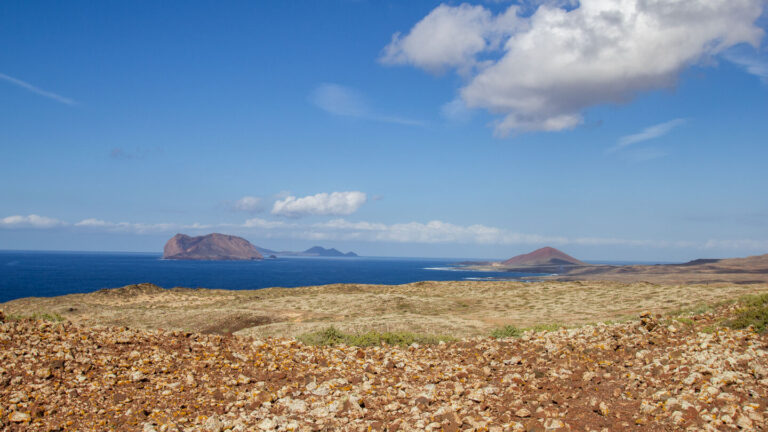
Marine life in the Atlantic – dolphins and whales off La Graciosa
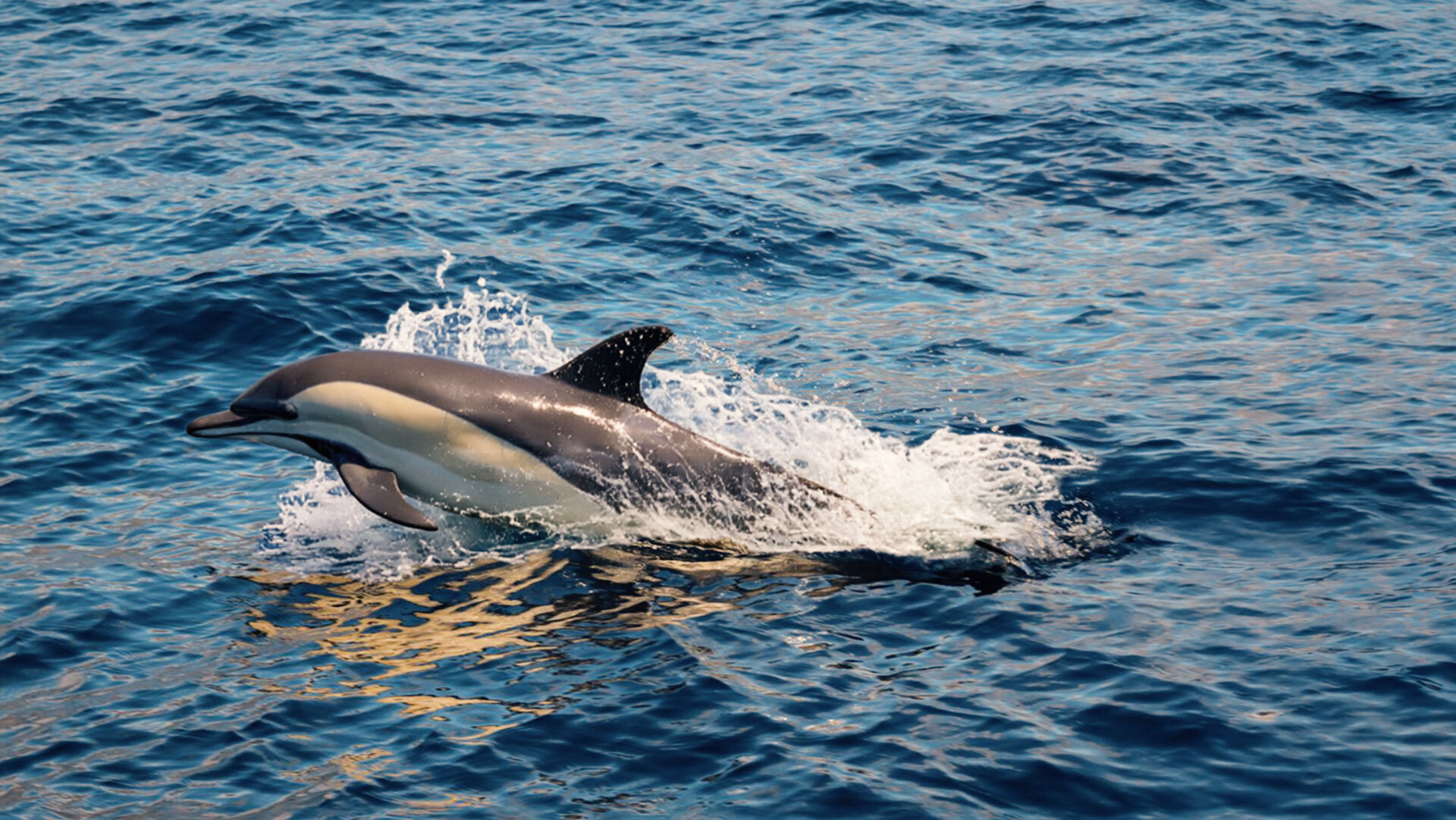
The west coast of La Graciosa marks the boundary between the protected island waters and the open Atlantic. Here, where the turquoise shallows give way to the blue depths, dolphins and occasionally whales can be spotted. There’s no guarantee – but it’s one of the best chances in the Canary Islands of seeing marine mammals in the wild.
The most common species
Bottlenose dolphin (Tursiops truncatus)
| Bottlenose dolphin | |
|---|---|
| Art | Bottlenose dolphin – the most common dolphin species in the Canary Islands |
| Distribution | All year round off the west coast of La Graciosa |
| Behaviour | Often in groups (schools) of 5–30 animals · frequently breach |
| Size | 2–4 metres in length |
| Best viewing | From the west coast or by boat |
Bottlenose dolphins are the most approachable dolphins in the Atlantic. They enjoy approaching boats and riding in bow waves – which makes boat trips ideal viewing opportunities.
Striped dolphin (Stenella coeruleoalba)
Striped dolphins are faster and more shy than bottlenose dolphins – they are often seen in large groups cutting through the water at high speed. A distinctive feature is the pale stripe on their flanks.
Sperm whales and pilot whales – rare visitors
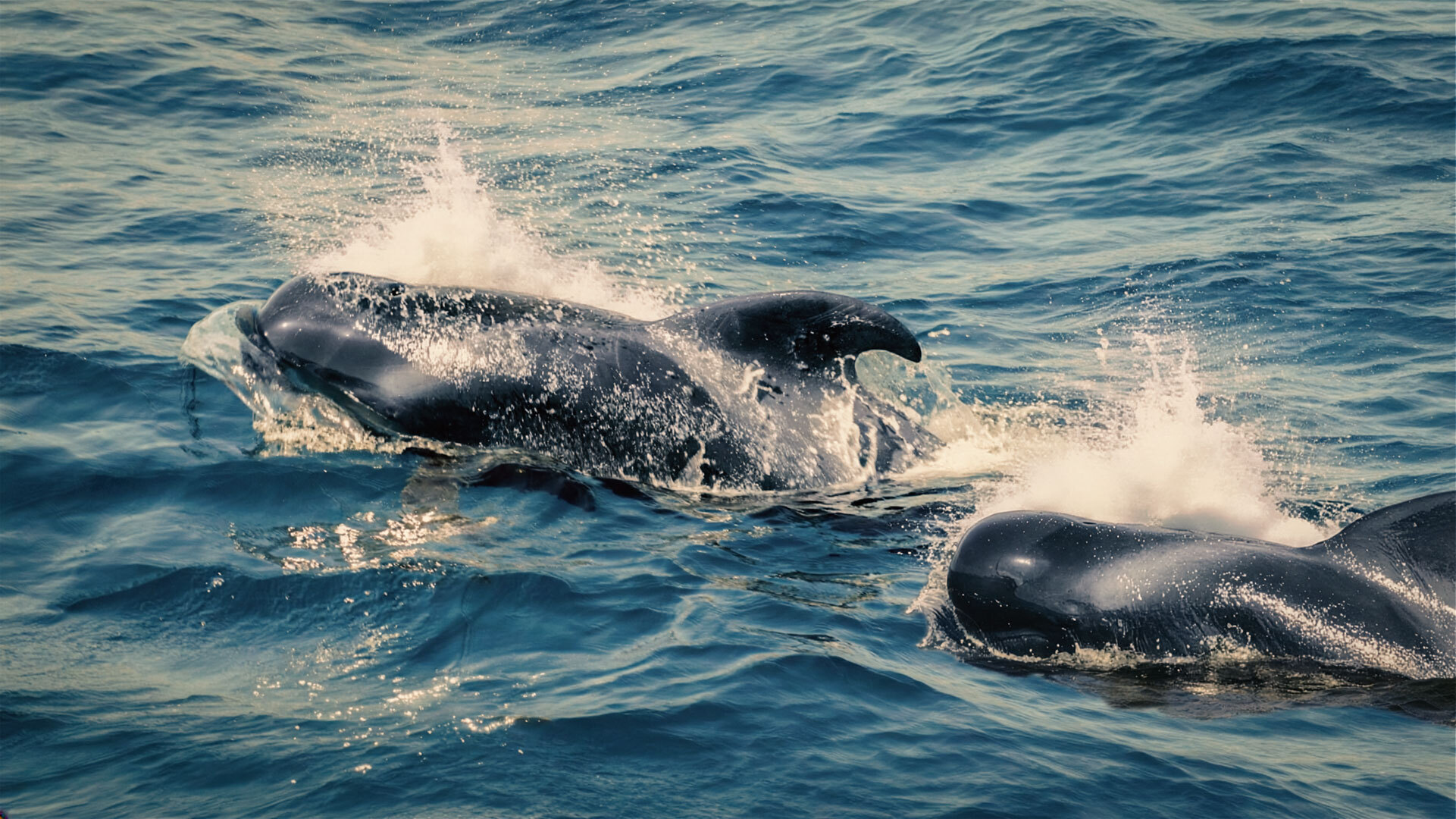
Sperm whales und Pilot whales occasionally visit the waters around the Chinijo ArchipelagoSightings are rare but have been documented. If you’re lucky, you’ll experience one of the most spectacular moments the Atlantic has to offer.
Best spots for sightings
On foot along the west coast
A walk along the west coast of La Graciosa offers good chances of spotting dolphins. Especially in the mornings, when the water is calm, the animals can often be seen at the surface. Binoculars recommended.
By boat: the best option
The best vantage point is a boat. Dolphins often actively approach boats. Snorkelling and boat trips from Caleta del Sebo offers regular dolphin sightings.
Tips for spotting dolphins
- Take binoculars: essential for spotting dolphins from the coast
- Mornings: calmest waters, best visibility
- Book a boat trip: dolphins actively approach boats
- Patience: dolphins are wild animals – sightings are not guaranteed
- West coast via the Playa de las Conchas route: the best stretch of coastline
Nature conservation – mandatory information
- Wild camping prohibited – without exception across the entire island
- Campfires prohibited – including on the beach
- Bicycles permitted only on designated tracks
- Entry to Montaña Clara, Roque del Este and Roque del Oeste prohibited
- Chinijo Archipelago Nature Park · Lanzarote UNESCO Biosphere Reserve since 1993
- Chinijo Archipelago Marine Reserve – 70,000 ha, Europe’s largest marine reserve
Not on an organised basis on La Graciosa. Chance encounters whilst snorkelling are possible – keep your distance and do not chase the animals.
In the mornings and evenings – when the water is calmest and the animals are more active at the surface.
Conclusion
- Dolphins off La Graciosa: all year round, on the west coast and on boat trips.
- Bottlenose dolphins are the most common species – often seen in groups and frequently active.
- Binoculars from the coast or a boat trip: the two best options.
This article is based on on-site research by the go-la-graciosa.com editorial team. Last updated: April 2026