No sand, just snail shells – Playa del Ámbar, the most extraordinary beach on La Graciosa
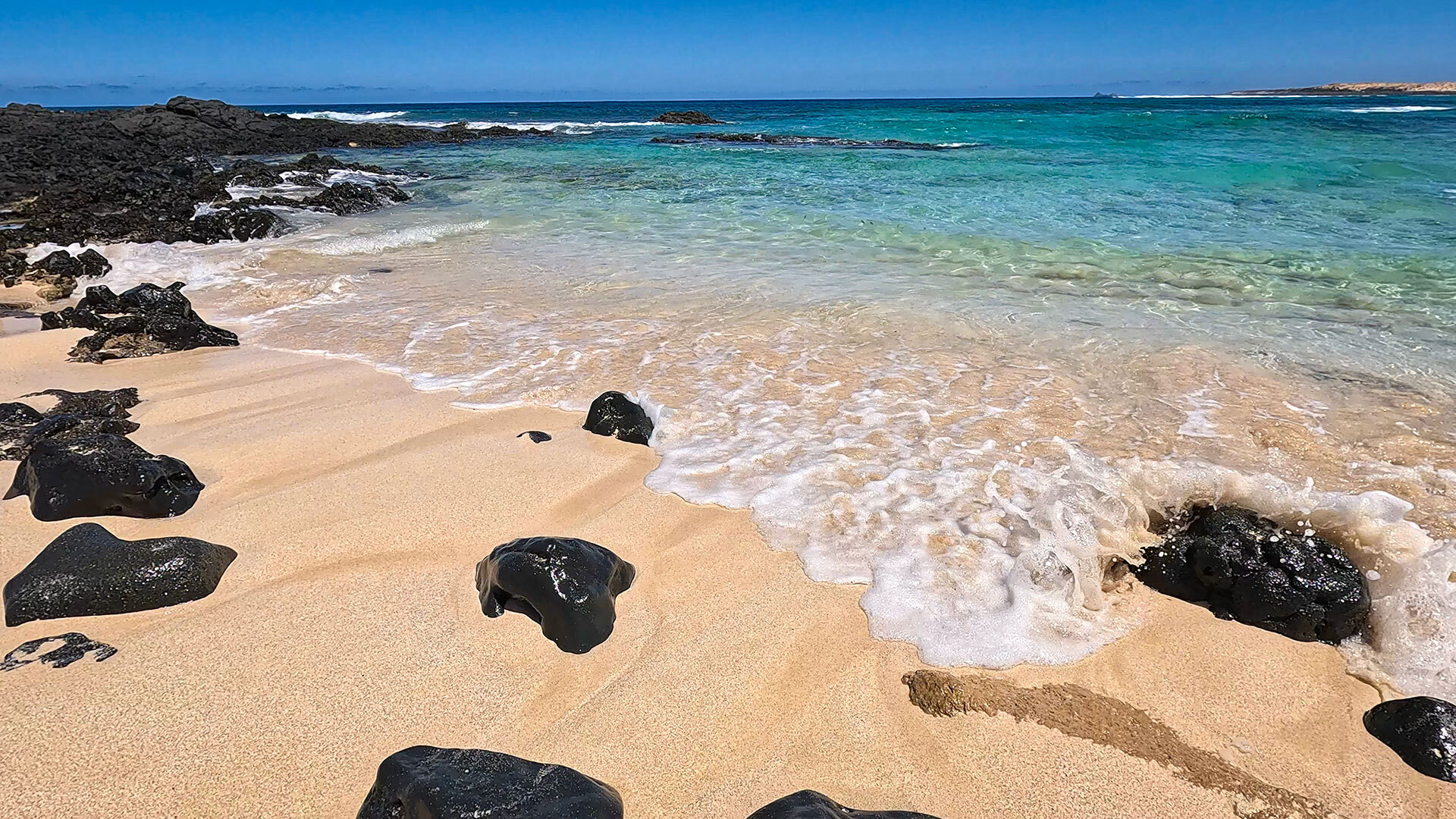
Playa del Ámbar – also known as known as – is the most extraordinary beach on La GraciosaNot because of its length (over 600 metres), nor because of its location (on the north coast, in a remote spot), but because of what lies there instead of sand: millions of snail shellsAn entire beach made up of tiny, colourful mollusc shells that the Atlantic has washed up here over thousands of years.
In addition: pirate legends, fossilised brood cells of extinct species of fur bees and a backdrop of black basalt – with Montaña Clara and Alegranza just off the coast.
The Snail Beach
What lies there instead of sand
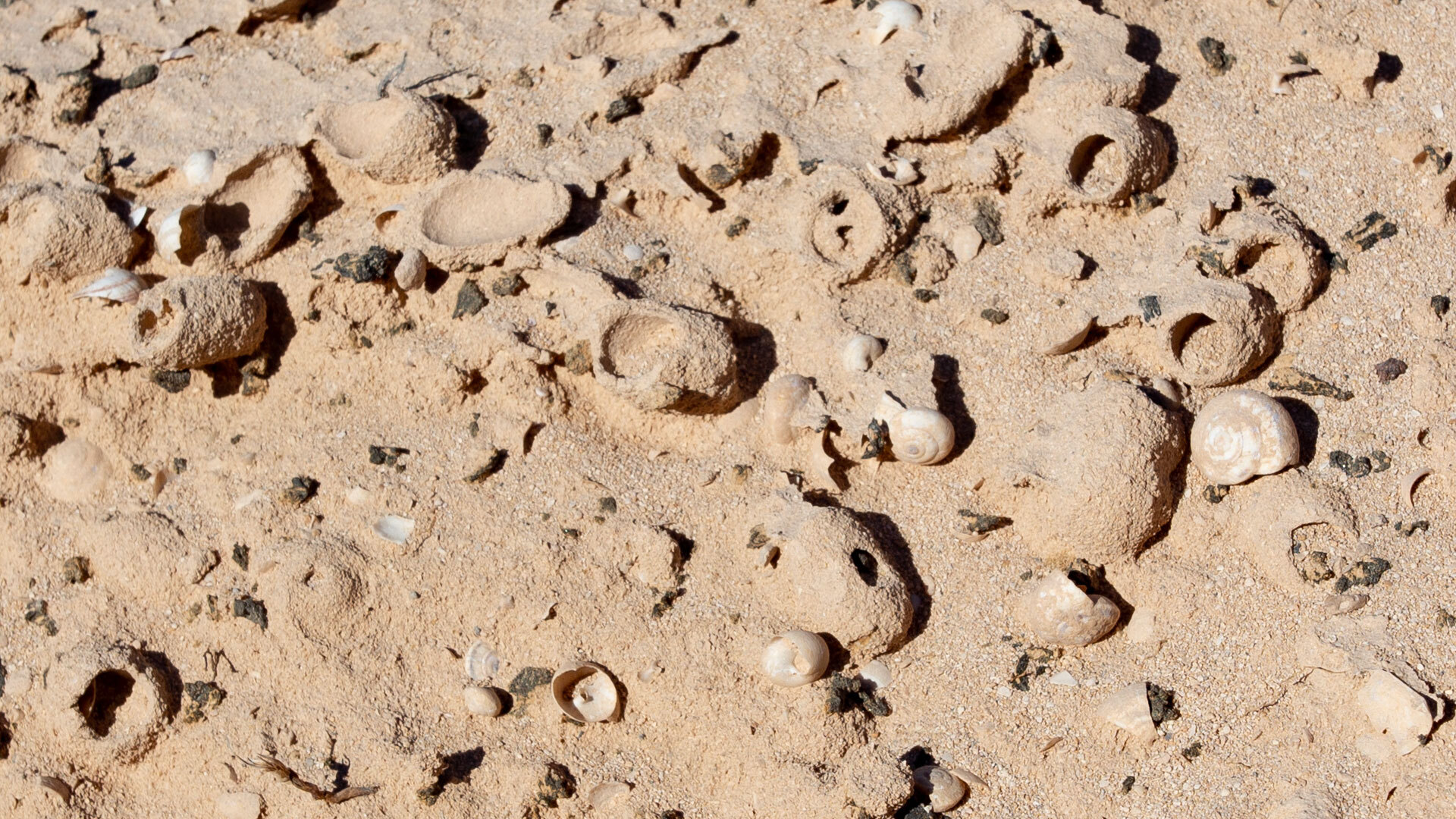
What at first glance looks like coarse, colourful sand turns out, on closer inspection, to be thousands of tiny snail and mussel shells. Brown, white, orange, beige – a natural mosaic stretching across the entire beach.
The dominant species: Strombida and various gastropods that live in the rock formations off the coast and are washed up onto the beach by the Atlantic after they die. The result has accumulated over millennia – a stratigraphic archive of the Atlantic.
The pirate legends
The ‘Ámbar’ in ‘Playa del Ámbar’ stands for amber – and the name has a history. Historically, this remote north coast was a possible port of call for smugglers and pirates who frequented the Canary Islands’ shipping routes in the 16th–18th centuries. The exact legends vary – sunken treasure, hidden caches – but all place the secret on this secluded coast, which is barely visible from the mainland.
Fossils: fossilised brood cells
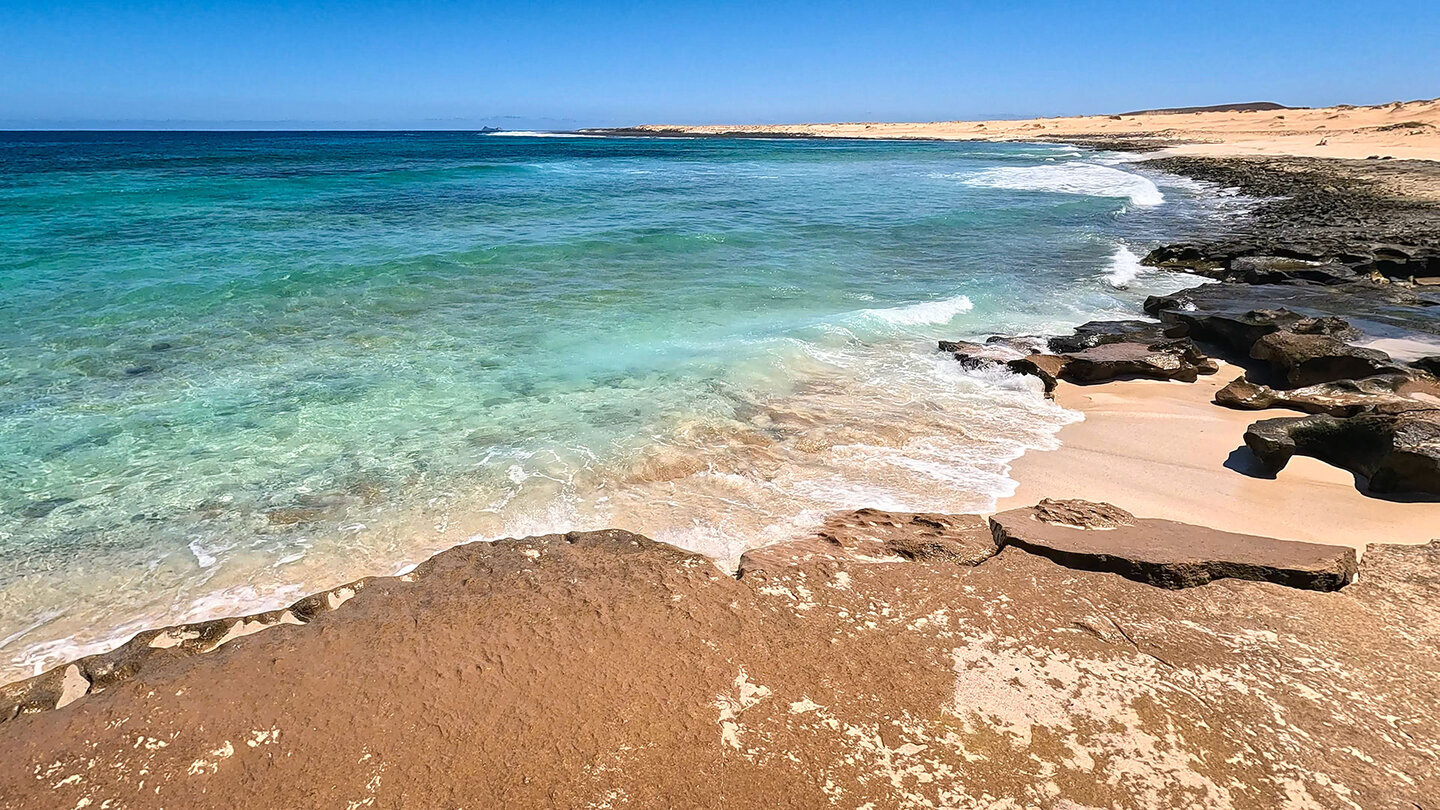
On the lava rocks around Playa del Ámbar, one can find fossilised brood cells of extinct species of fur bees (Anthophora). These bees built their nests in sandy soil, which later fossilised. What remains are fossilised tubular structures in the rock – a rare find worldwide, but particularly well-preserved near the coast on La Graciosa.
The beach at a glance
| At a glance | |
|---|---|
| Location | North coast, approx. 6–7 km from Caleta del Sebo · near Pedro Barba |
| Length | Over 600 metres |
| Surface | Snail shells instead of sand |
| Swimming | NOT possible – strong currents, north coast location |
| Snorkelling | Not recommended – check conditions |
| Getting there | On foot (approx. 2–3 hours) · Jeep taxi · Bicycle |
| Kiosk/toilets | None |
| Special features | Snail shells · Fossilised brood chambers · Basalt cliffs · Pirate legends |
Getting there
On foot: the long but rewarding route
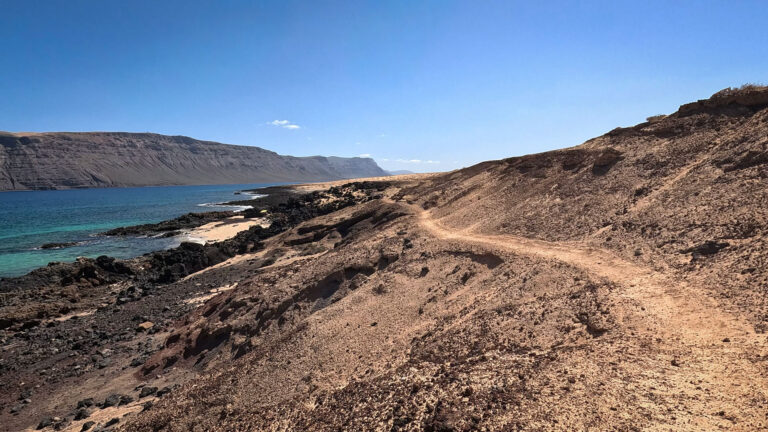
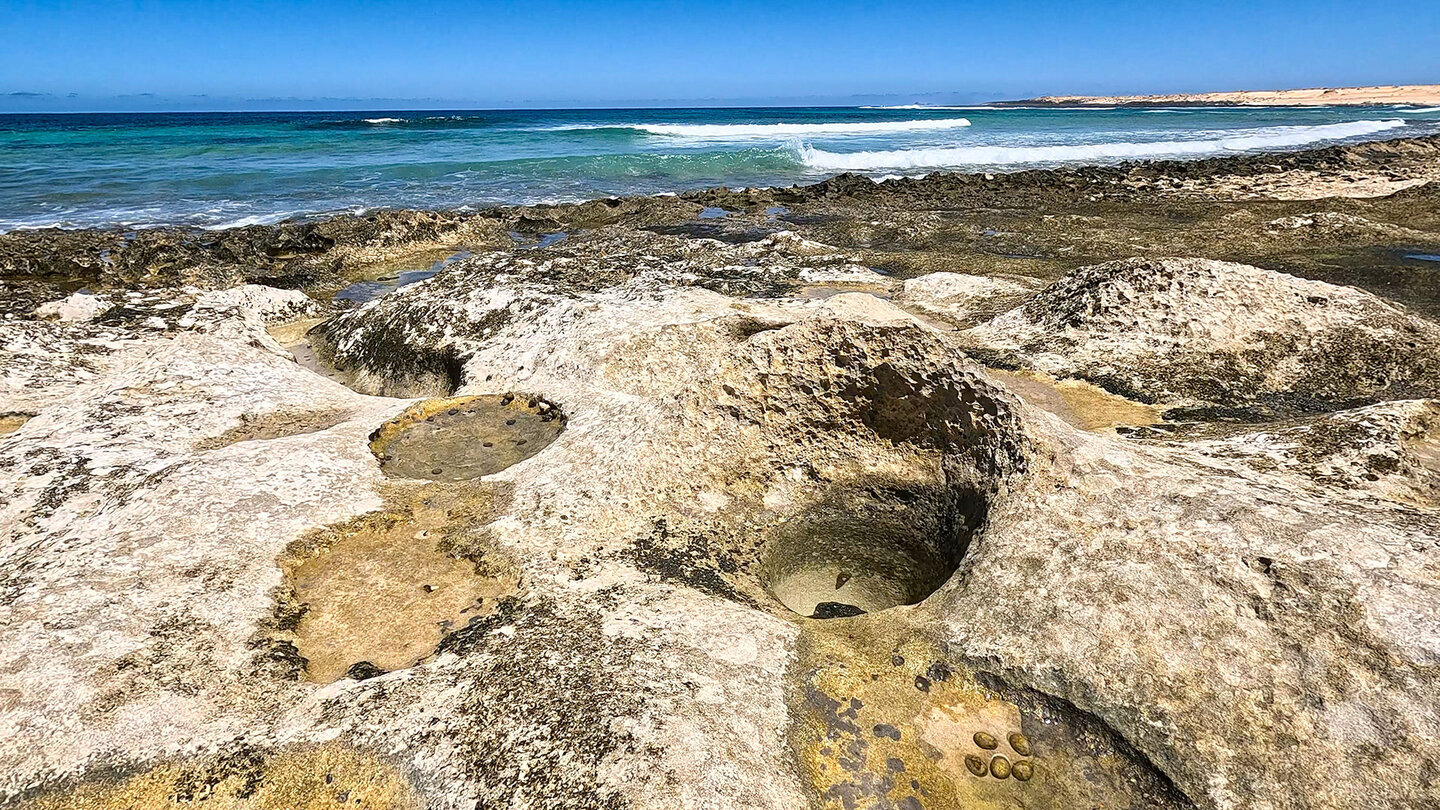
The north coast route starting from Caleta del Sebo leads across the Las Hoyas sand plain, past Playa de las Conchas and on to Playa del Ámbar. Approx. 2.5–3 hours one way. GPS track essential.
Jeep taxi: more comfortable
Jeep taxi as far as possible – the final stretch is always on foot.
⚠️ Important information
NOT A SWIMMING BEACH – located on the north coast, strong currents, no exceptions
Even on calm days: undercurrents are treacherous and invisible
No lifeguard on duty
Fossils and snail shells: DO NOT take ANYTHING with you – nature reserve
Nature conservation
- Wild camping prohibited
- Campfires prohibited
- Off-road driving prohibited
- Archipiélago Chinijo Nature Park · Lanzarote UNESCO Biosphere Reserve · Archipiélago Chinijo Marine Reserve (70,000 ha)
The name refers to amber (ámbar in Spanish) – possibly historical finds or trade goods that were washed ashore here. The pirate legends add a mystical dimension to the name.
Not recommended – due to currents and its location on the north coast. For snorkelling: Playa de la Cocina or Playa Francesa.
No – strictly forbidden in the nature reserve. Everything must remain on the beach.
Conclusion
- Playa del Ámbar: La Graciosa’s most extraordinary beach – snail shells instead of sand, fossils, pirate legends.
- Not a beach for swimming – come, marvel, take photos, leave.
- The journey there through the north is just as unforgettable as the beach itself.
This article is based on on-site research by the go-la-graciosa.com editorial team. Last updated: April 2026