Flat, well-camouflaged, fascinating – angel sharks on La Graciosa
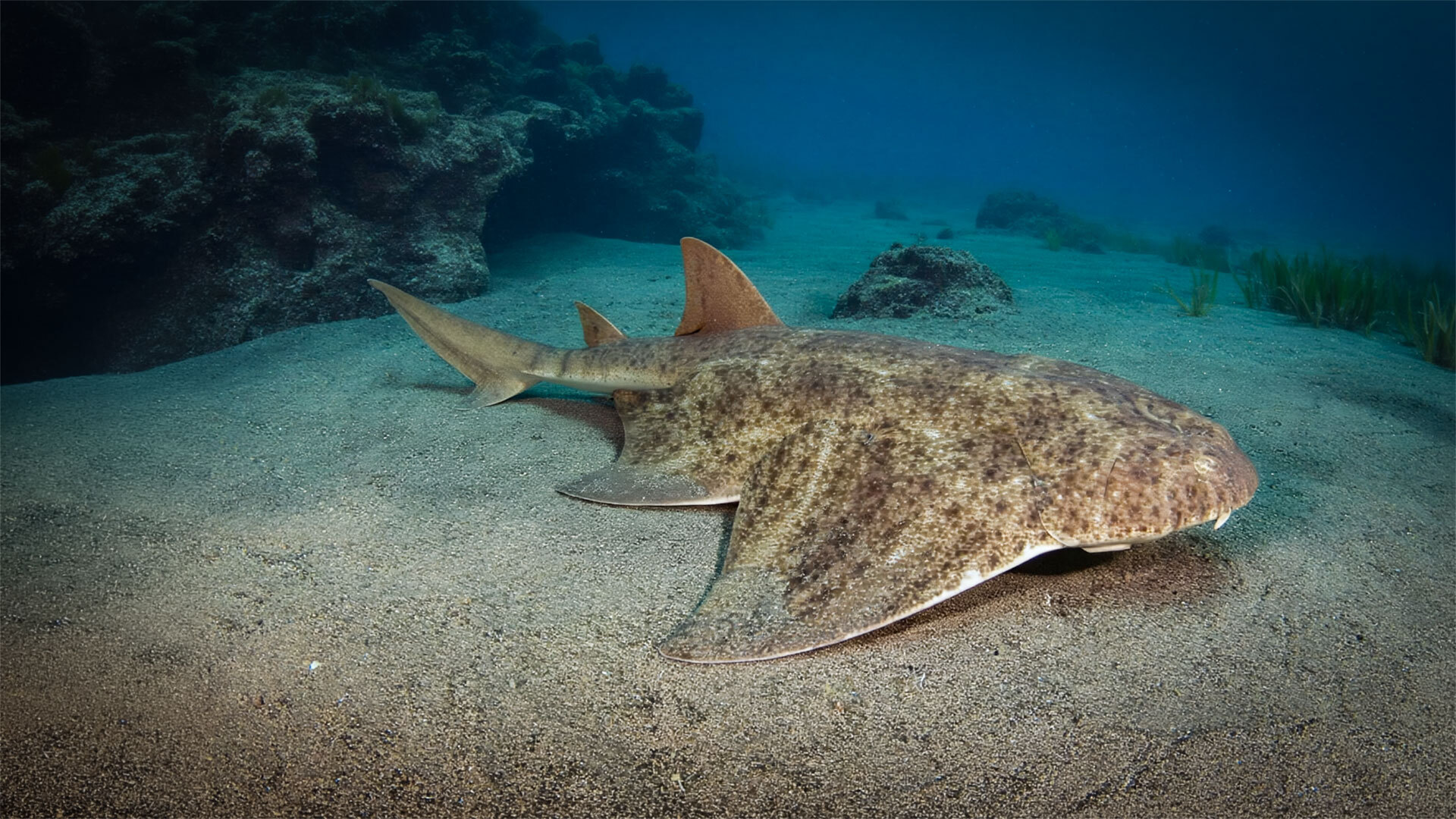
Angel sharks – in Spanish Angelote (Squatina squatina) – are the most fascinating sharks in the Canary Islands. Not because they are dangerous – they aren’t. But because they are so different from anything one would normally imagine a shark to be: flat like a ray, lying on the sandy seabed, almost invisible.
What makes angel sharks so special
| At a glance | |
|---|---|
| Scientific name | Squatina squatina |
| Size | Approx. 1.5–2.5 metres in length |
| Behaviour | Bottom-dweller – lies flat in the sand and waits for prey |
| Camouflage | Almost perfect – barely visible on sandy seabed |
| Danger to humans | Minimal – only bites if stepped on or disturbed |
| Conservation status | Critically Endangered (IUCN) – the Reserva Marina actively protects them |
When and where to spot them on La Graciosa
December to March: angel shark season
From December to March, angel sharks overwinter in the shallow waters around La Graciosaparticularly on the sandy seabed off Montaña AmarillaThe water is colder, the sharks are less active – and therefore easier to spot.
Dive sites
| At a glance | |
|---|---|
| Montaña Amarilla | Most common site – sandy bottoms at depths of 5–20 m |
| La Burrera | Occasional sightings |
| Playa de la Cocina | Shallow area – less frequent sightings |
Buceo La Graciosa offers specialist angel shark dives: +34 629 45 14 30 · buceolagraciosa.com The dive guides know the current locations.
Why the Marine Reserve protects angel sharks
Squatina squatina is critically endangered – worldwide. On La Graciosa, the population is protected by the Reserva Marina del Archipiélago Chinijo no trawling, no net fishing, no spearfishing in the core zones. The result: one of the most stable angel shark populations in the Eastern Atlantic.
Nature conservation
- Archipiélago Chinijo Nature Park · Lanzarote UNESCO Biosphere Reserve · Archipiélago Chinijo Marine Reserve (70,000 ha)
Practical tips
- December to March: the best season for angel sharks
- Buceo La Graciosa: Angel shark diving as a special offer
- Do not touch: Angel sharks bite when provoked
- Snorkelling: Angel shark sightings are very rare – diving is necessary for reliable encounters
Not if you leave them in peace. Angel sharks only bite in self-defence – if you step on them or touch them. If approached calmly: completely harmless.
Very rarely – they are found in deeper water (5–20 m). Diving with Buceo La Graciosa is the most reliable option.
Conclusion
- Angel sharks on La Graciosa: December to March, at Montaña Amarilla, at depths of 5–20 m.
- Critically endangered – the Marine Reserve actively protects them.
- Book angel shark diving with Buceo La Graciosa.
This article is based on on-site research by the go-la-graciosa.com editorial team. Last updated: April 2026