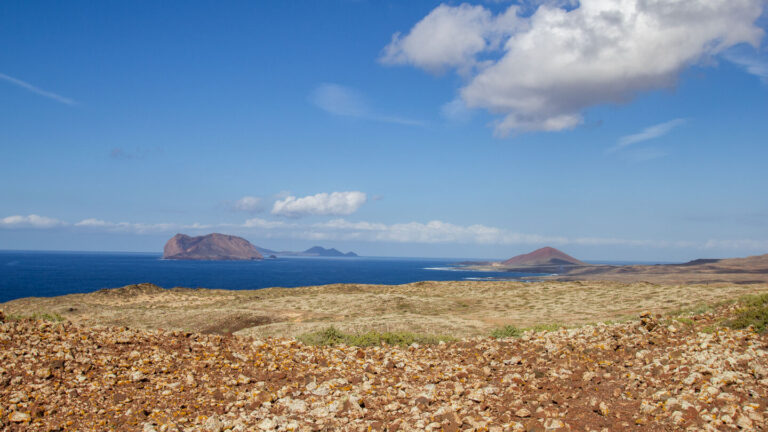
Ospreys, falcons, shearwaters – birds in the Chinijo Archipelago
La Graciosa does not itself have any large bird colonies – the actual breeding grounds are the uninhabited neighbouring islands Montaña Clara und AlegranzaBut from La Graciosa you can see them: ospreys circling above the water; Eleonora’s falcons resting during their autumn migration; and shearwaters gliding low over the waves.
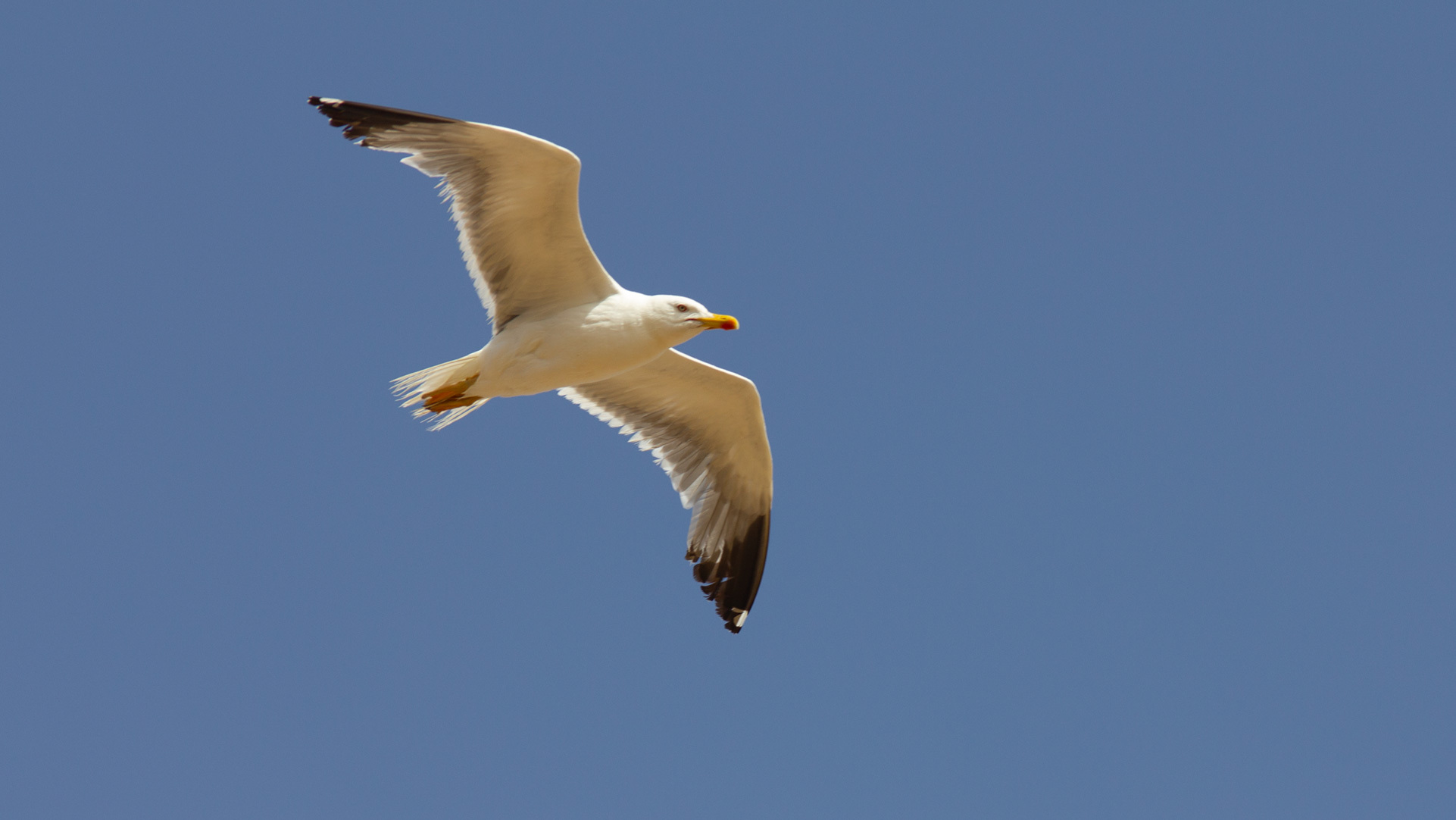
The main bird species
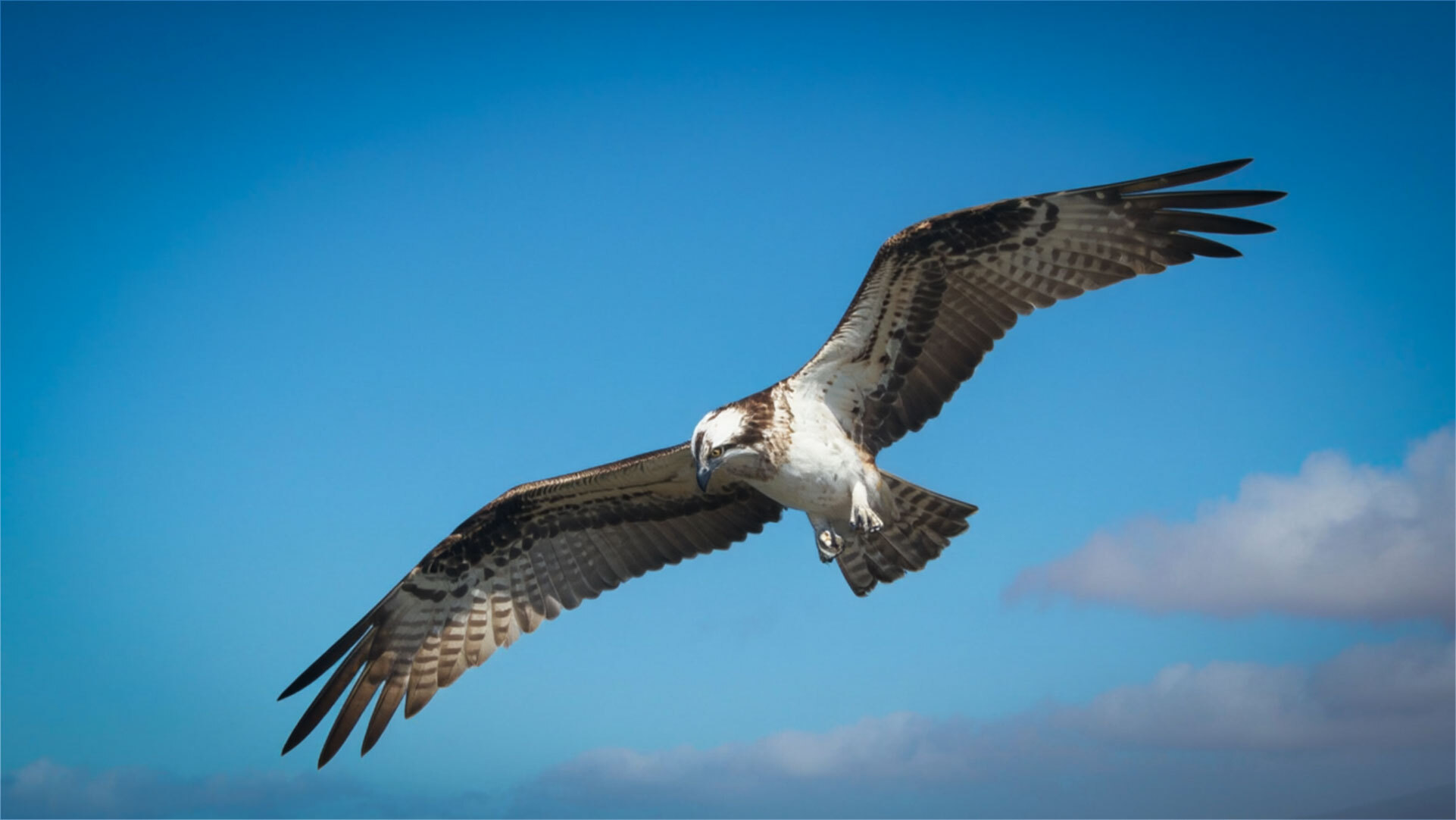
Osprey (Pandion haliaetus) – breeding bird
| Osprey on La Graciosa | |
|---|---|
| Status | Breeding bird on Montaña Clara and Alegranza |
| Observation period | All year round – breeding season from spring to summer |
| Distinguishing features | Large bird of prey, white underparts, dark upperparts, characteristic ‘W’-shaped flight pattern |
| Behaviour | Dives for fish – a spectacular sight to behold |
| Best spot | From Playa de las Conchas or by boat within sight of Montaña Clara |
Osprey are rare in the Canary Islands – some of Spain’s last remaining pairs still breed in the Chinijo Archipelago. They are often seen circling over the water between La Graciosa and Montaña Clara.
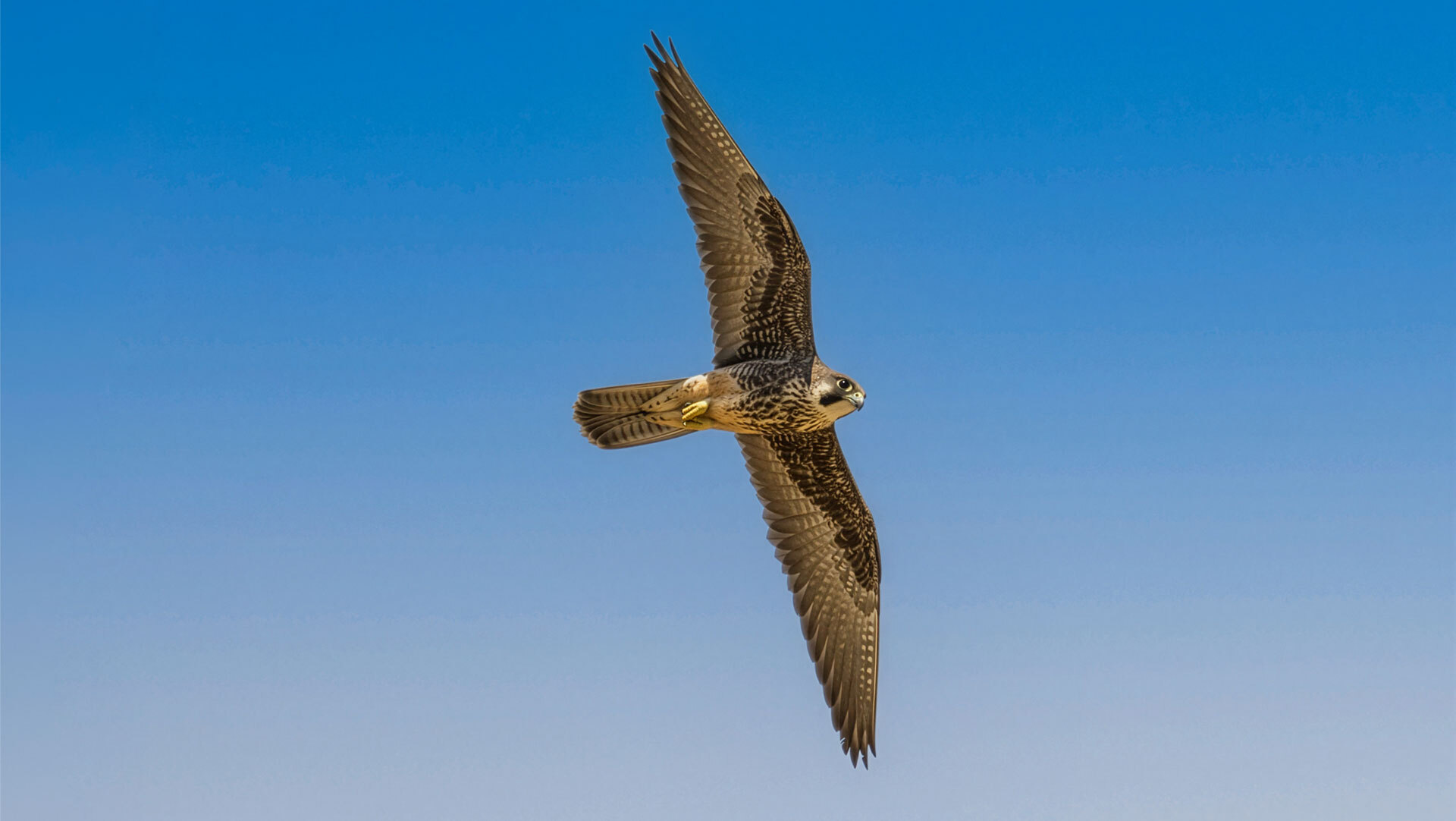
Eleonora’s falcon (Falco eleonorae)
| Eleonora’s falcon | |
|---|---|
| Status | Migratory bird – a summer visitor, breeds on neighbouring islands |
| Observation period | August to October |
| Distinctive feature | Breeds late (August–October) to feed on migratory birds |
| Behaviour | An elegant, swift flyer – often seen in groups |
Eleonora’s falcons are migratory birds from Africa that stop off briefly on their return journey in autumn. The Chinijo Archipelago is one of Europe’s most important breeding grounds for this species.
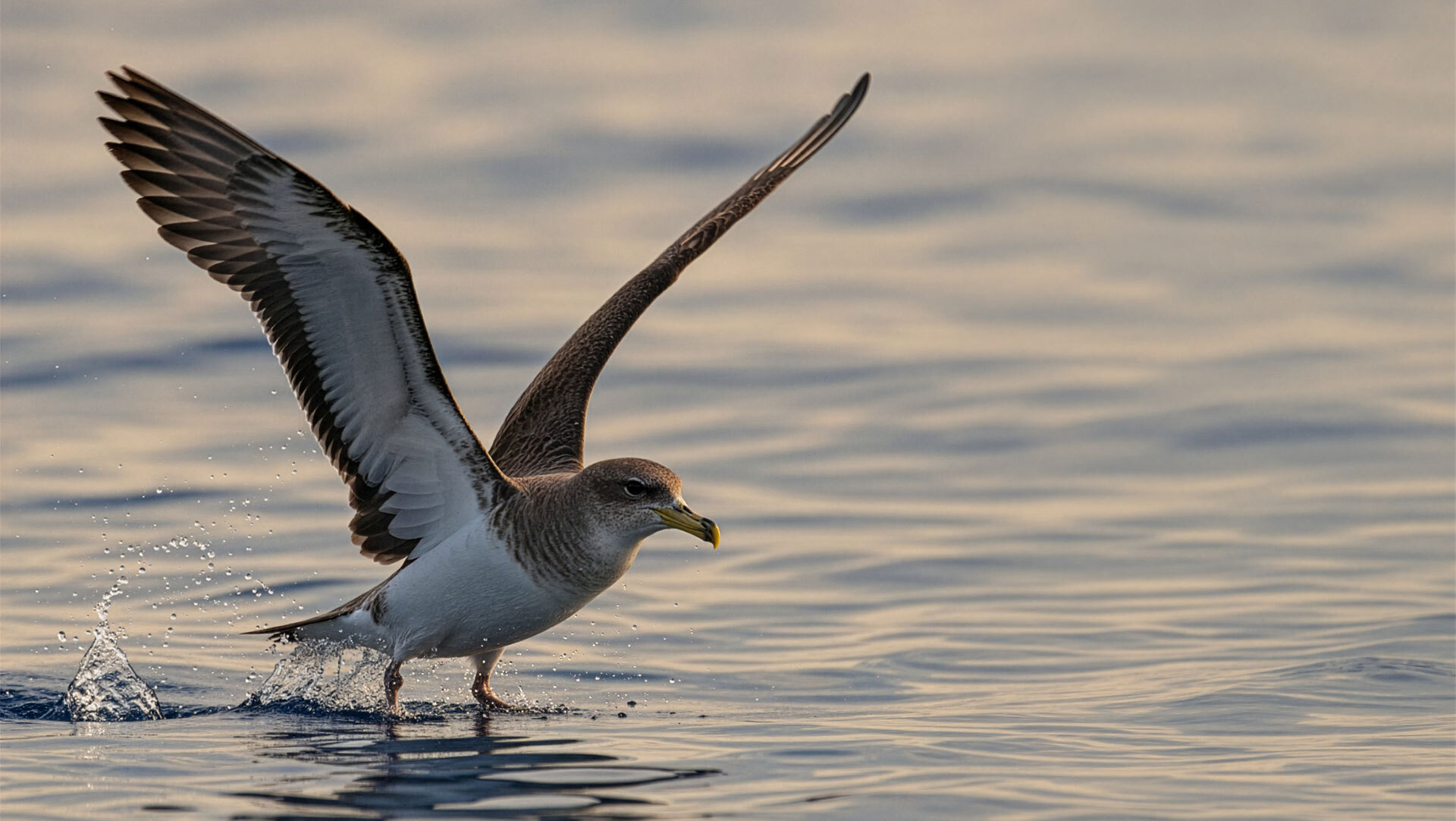
Yellow-billed Shearwater (Calonectris borealis)
Yellow-billed Shearwaters breed in rock cavities Alegranza und Montaña ClaraThey can be seen flying low over the sea – a characteristic glide just above the crests of the waves. The colony on Alegranza is one of the largest in Europe.
Other bird species
| Other bird species on La Graciosa | |
|---|---|
| Egyptian Vulture (Neophron percnopterus) | Occasional – summer visitors from Africa |
| Desert Falcon (Falco pelegrinoides) | Occasionally seen on the cliffs |
| Storm Swallows | Riding the slipstream behind ferries during the crossing |
| Gulls & cormorants | All year round, at the harbour and along the coast |
Best vantage points
| Best birdwatching spots | |
|---|---|
| Playa de las Conchas | View of Montaña Clara – ospreys frequently sighted |
| Montaña Bermeja (summit) | 360-degree view of neighbouring islands |
| Boat trip | Close-up view of breeding colonies – shearwaters, ospreys |
| Caleta del Sebo harbour | Gulls, cormorants, occasionally ospreys fishing |
Tips for birdwatching
- Binoculars (at least 8×42) are essential – the most important species are found on the neighbouring islands
- Best time: July–October for Eleonora’s falcons, all year round for ospreys
- Do not set foot on the neighbouring islands: bird conservation is a priority
Nature conservation – mandatory notice
- Wild camping prohibited – without exception across the entire island
- Campfires prohibited – including on the beach
- Bicycles permitted only on designated tracks
- Entry to Montaña Clara, Roque del Este and Roque del Oeste prohibited
- Chinijo Archipelago Nature Park · Lanzarote UNESCO Biosphere Reserve since 1993
- Archipiélago Chinijo Marine Reserve – 70,000 ha, Europe’s largest marine reserve
Montaña Clara, Roque del Este and Roque del Oeste: No entry.
Conclusion
- La Graciosa itself is not a classic birding destination – but the view of the neighbouring islands is unique.
- Ospreys, Eleonora’s falcons, shearwaters: all visible from the coast or by boat.
This article is based on on-site research by the go-la-graciosa.com editorial team. Last updated: April 2026